Head-to-head three-season sleeping pad comparison

NEMO Tensor Trail vs Sea to Summit Pursuit

NEMO’s Tensor Trail is a 3.5-inch insulated air pad built around a small, light packed profile. Sea to Summit’s Pursuit is a 2-inch self-inflating pad with a slightly higher published R-Value, a wider Regular Contour shape, and a different setup rhythm. This is a packing-versus-self-inflation decision, not a universal comfort contest.

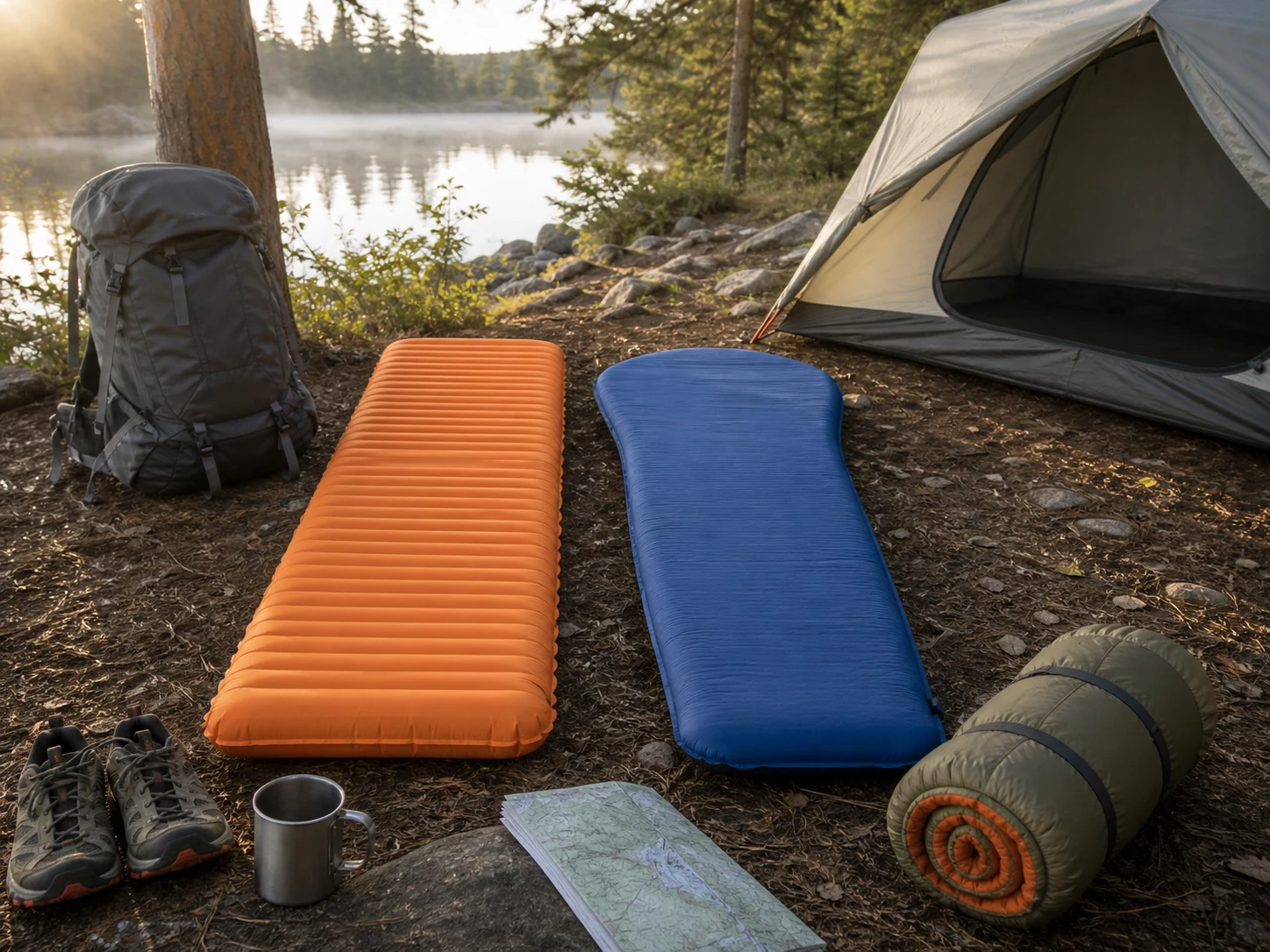
Two unbranded backpacking sleeping pads, one orange insulated air pad and one blue self-inflating pad, beside a tent with a pack, trail shoes, camp mug, and map for the NEMO Tensor Trail vs Sea to Summit Pursuit comparison.
The short answer

Which one should most people buy?

Both are published as three-season options. The better default is the one whose weight, packed size, shape, and inflation routine resemble the trips you actually take.

The NEMO Tensor Trail Ultralight Insulated Sleeping Pad, Regular is the better default for most backpackers because NEMO lists a 13-ounce minimum weight, a 10-by-4-inch packed size, 72-by-20-inch dimensions, and 3.5 inches of thickness for the Regular. Its 2.8 R-Value and aluminized-film insulation put it in the same broad three-season conversation as the Pursuit, while the smaller listed packed profile makes the decision straightforward for a pack where space and weight are active constraints. NEMO also specifies Spaceframe baffles, bluesign-approved recycled nylon fabrics, a Vortex pump sack, and a Laylow microadjustable valve.

The Sea to Summit Pursuit Self-Inflating Sleeping Pad, Regular Contour is not a lesser version of the same idea. Sea to Summit lists a 3.0 R-Value, 72-by-22-by-2-inch Regular Contour shape, 21.3-ounce weight, and 11-by-6-by-6-inch packed size. Its foam core self-inflates, then the XPEL multi-function valve handles inflation, fine adjustment, deflation, and packing. Pick it when that setup feels more useful than NEMO’s lighter air-pad route, or when the wider listed Regular width is the better fit. For most people building a backpacking kit from scratch, the Tensor Trail’s lower listed weight, smaller packed size, and greater listed thickness make it the more flexible recommendation.
At a glance

The key specs.

Manufacturer-published dimensions and construction details, without live-price claims or promises about a particular night outdoors.

Light packing default

NEMO Tensor Trail

  • ModelTensor Trail Ultralight Insulated, Regular
  • Warmth & thickness2.8 R-Value; 3.5 in thick
  • Dimensions72 x 20 in; mummy shape
  • Pack & weight13 oz minimum; 10 x 4 in diameter packed
  • Controls & fitVortex pump sack and Laylow microadjustable valve
  • Main drawback20-inch Regular width and manual air-pad setup
  • Buyer-fit summaryBackpackers prioritizing a light, compact, thick insulated air pad
View NEMO on Amazon
Self-inflating alternative

Sea to Summit Pursuit

  • ModelPursuit Self-Inflating, Regular Contour
  • Warmth & thickness3.0 R-Value; 2 in thick
  • Dimensions72 x 22 x 2 in; Contour shape
  • Pack & weight21.3 oz; 11 x 6 x 6 in packed
  • Controls & fitSelf-inflating foam and XPEL multi-function valve
  • Main drawbackHeavier and bulkier on the published Regular figures
  • Buyer-fit summaryCampers who prefer self-inflation and a wider Regular profile
View Sea to Summit on Amazon
Fit check

Choose by routine, not sleeping-pad snobbery.

Start with the pack, shelter, and setup sequence you repeat; then use the concrete published differences to break the tie.

Buy the NEMO Tensor Trail if

You want to keep the listed carry burden low without giving up a 3.5-inch inflated profile. The Regular Tensor Trail measures 72 by 20 inches, lists a 13-ounce minimum weight, and packs to 10 by 4 inches in diameter. Its aluminized-film insulation, Spaceframe baffles, Vortex pump sack, and Laylow valve are tangible details for a buyer who expects to inflate an air pad as part of camp setup.

Skip it if: a 22-inch listed Regular width, a self-inflating foam core, and the Pursuit’s XPEL valve are more useful to your routine than the Tensor Trail’s packability.

Buy the Sea to Summit Pursuit if

You prefer a self-inflating mat and want the Regular Contour’s listed 72-by-22-inch dimensions, 2-inch thickness, and 3.0 R-Value. Sea to Summit specifies XPEL valve inflate, deflate, and fine-tune functions. Select it if opening, adjusting, and rolling up a foam-core pad feels like your preferred process.

Skip it if: a 21.3-ounce listed weight and 11-by-6-by-6-inch packed size feel too large for the pack space you have reserved for a sleeping pad.

Routine check: these are different pad constructions, not interchangeable comfort guarantees. Confirm the current manufacturer instructions, your shelter’s floor dimensions, your sleep system, and the conditions you plan to encounter before buying.
Side by side

Compare the trade-offs.

Concrete manufacturer details first; no live pricing, review scores, or claims that one pad guarantees a better night.

MetricNEMO Tensor TrailSea to Summit Pursuit
Best fitBackpackers minimizing listed pack weight and bulkCampers preferring self-inflation and added Regular width
ModelTensor Trail Insulated, RegularPursuit Self-Inflating, Regular Contour
R-Value2.83.0
Dimensions72 x 20 in; 3.5 in thick72 x 22 x 2 in
Weight13 oz minimum weight21.3 oz listed weight
Packed size10 x 4 in diameter11 x 6 x 6 in
Inflation & constructionAir pad, Spaceframe baffles, Vortex pump sack, Laylow valveSelf-inflating foam, XPEL multi-function valve
Buyer fit summaryThick, compact insulated air-pad routeWider self-inflating route with a slightly higher published R-Value
How we reasoned

The criteria behind the pick.

Sea to Summit earns its alternative recommendation through meaningful differences: a 3.0 R-Value instead of 2.8, a 22-inch width instead of 20 inches, and an XPEL multi-function valve on a self-inflating foam core. Choose it when that width and setup process are worth more listed weight and bulk.

NEMO specifies aluminized-film insulation, Spaceframe baffles, a Vortex pump sack, and a Laylow valve. Sea to Summit specifies recycled solution-dyed fabric and an XPEL valve with inflate, deflate, and fine-tune functions. These are selection details, not comfort promises.

The Tensor Trail wins because it gives most backpackers a compact, lower-listed-weight package with a 3.5-inch published thickness. Choose the Pursuit when self-inflating foam and a 22-inch Regular width outweigh the carry penalty. Match the exact current variant to your own sleep system before checkout.

Source trail

What the recommendation is based on.

NEMO Tensor Trail

NEMO’s official Tensor Trail page lists the Regular pad’s 2.8 R-Value, 72-by-20-inch dimensions, 3.5-inch thickness, 13-ounce minimum weight, 10-by-4-inch packed size, aluminized-film insulation, recycled nylon fabrics, Spaceframe baffles, Vortex pump sack, and Laylow valve.

Read NEMO’s Tensor Trail product page

Sea to Summit Pursuit

Sea to Summit’s official Pursuit page lists the Regular Contour’s 3.0 R-Value, 72-by-22-by-2-inch dimensions, 21.3-ounce listed weight, 22.2-ounce packed weight, 11-by-6-by-6-inch packed size, self-inflating construction, recycled solution-dyed fabric, and XPEL multi-function valve.

Read Sea to Summit’s Pursuit product page

Official product-page specs; no live price or ratings.

Before checkout

Questions before checkout.

Answers match the FAQ structured data on this page.

Which sleeping pad is the better pick for most people?

The NEMO Tensor Trail Regular is the better pick for most backpackers choosing between these two three-season pads. NEMO lists a 2.8 R-Value, 3.5-inch thickness, 72 by 20 inch dimensions, 13-ounce minimum weight, and a 10 by 4 inch packed size for its Regular. Choose the Sea to Summit Pursuit Regular Contour instead when its self-inflating foam construction, 3.0 R-Value, 22-inch width, and XPEL multi-function valve better match your camp routine.

How do the Regular pads differ in warmth and thickness?

NEMO lists the Tensor Trail Regular at a 2.8 R-Value and 3.5 inches thick. Sea to Summit lists the Pursuit Regular Contour at a 3.0 R-Value and 2 inches thick. Those published values describe different aspects of the pads, and neither is a promise about a specific temperature, sleeper, shelter, bag, surface, or condition.

What is the packing and weight trade-off?

NEMO lists the Tensor Trail Regular at 13 ounces minimum weight with a 10 by 4 inch packed size. Sea to Summit lists the Pursuit Regular Contour at 21.3 ounces weight, 22.2 ounces packed weight, and an 11 by 6 by 6 inch packed size. The Tensor is the cleaner pick when a smaller listed packed profile and lower listed weight lead the decision.

How are the inflation systems different?

The Tensor Trail is an insulated air pad that NEMO supplies with a Vortex pump sack and its Laylow microadjustable valve. The Pursuit is a self-inflating pad using Sea to Summit’s XPEL multi-function valve, with separate inflate and deflate functions plus a fine-tune button. Both still call for checking the current manufacturer instructions before a trip.

Does this comparison use live prices or marketplace ratings?

No. This page avoids live price, stock, and marketplace-rating claims. The recommendation uses the manufacturers’ published R-Values, dimensions, thicknesses, weights, packed sizes, materials, and valve or inflation descriptions. Confirm the current listing and manufacturer information before buying.

Ready to choose?

Pick the sleeping pad that fits your packing routine.

Choose the NEMO Tensor Trail for the lower listed weight, smaller packed size, and 3.5-inch air-pad profile. Choose the Sea to Summit Pursuit when a self-inflating foam core, 22-inch Regular width, and XPEL valve better suit your camp setup.

NEMO Tensor TrailBest three-season sleeping pad pick
Amazon