Head-to-head portable Bluetooth speaker comparison

JBL Charge 6 vs
Bose SoundLink Plus

Charge 6 favors endurance, charging speed, IP68 protection, Auracast, and a removable strap. SoundLink Plus counters with Bose pairing, adjustable EQ, an attached utility loop, and a floating IP67 body.

As an Amazon Associate, Worth Adding may earn from qualifying purchases.

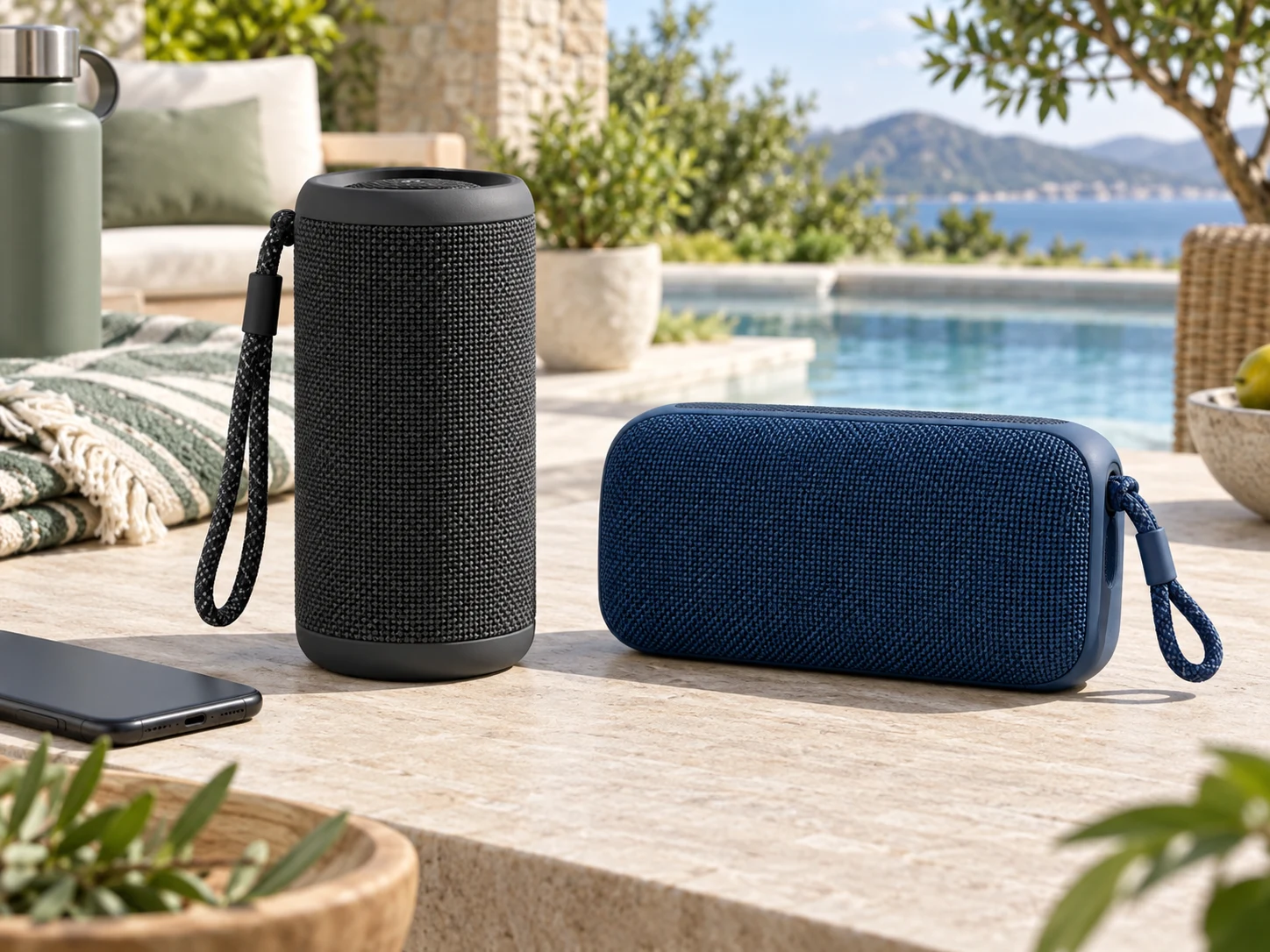
Two unbranded portable Bluetooth speakers with carry loops on a bright poolside patio for the JBL Charge 6 vs Bose SoundLink Plus comparison
The short answer

Which one should most people buy?

Charge 6 offers the more complete published travel specification. SoundLink Plus makes more sense for a Bose-centered setup.

The JBL Charge 6 is the better default because it turns a similar footprint into more published headroom. JBL lists 3.0 pounds, 9.0 by 3.9 by 3.7 inches, up to 28 hours of play time, a 3-hour charge, IP68, and a removable strap. Bose lists 3.29 pounds, 9.1 by 3.94 by 3.4 inches, up to 20 hours at moderate volume, up to a 5-hour charge, IP67, and an attached utility loop. JBL's specification set is easier to recommend for a long day away from an outlet.

Charge 6 also publishes a 30-watt RMS woofer and 15-watt RMS tweeter, compatible USB-C lossless playback, Auracast linking, and a phone-charging power bank. Those facts do not prove everyone will prefer its sound; output numbers are not a listening test. They do show more documented options for digital playback, group expansion, and outdoor use.

The Bose SoundLink Plus Portable Speaker is the alternative for buyers who value the Bose workflow more than JBL's battery ceiling. Bose provides app EQ, Party Mode with another compatible Bose speaker, Stereo Mode with a second SoundLink Plus, 15-watt USB-C charge-out, and an included USB-C cable. Bose also says the IP67 enclosure floats and is shock and rust resistant. Its utility loop is easy to clip, although it is not user replaceable.
At a glance

The key specs.

Manufacturer-published dimensions, battery, protection, connections, and included parts—not live prices or review scores.

Rugged all-rounder

JBL Charge 6

  • ModelJBLCHARGE6BLK
  • Size & weight9.0 x 3.9 x 3.7 inches; 3.0 pounds
  • Battery & chargingUp to 28 hours; 3-hour charge
  • ProtectionIP68; waterproof, dustproof, and drop-proof wording
  • Controls & fitJBL Portable app, Auracast, removable strap, USB-C lossless audio and power bank
  • Main drawbackNo charging cable listed in the box
View JBL Charge 6 on Amazon
Bose ecosystem pick

Bose SoundLink Plus

  • Model443516
  • Size & weight9.1 x 3.94 x 3.4 inches; 3.29 pounds
  • Battery & chargingUp to 20 hours at moderate volume; up to 5-hour charge
  • ProtectionIP67; shock and rust resistant; designed to float
  • Controls & fitBose app EQ, Party and Stereo modes, utility loop, 15-watt USB-C charge-out
  • Main drawbackShorter published battery ceiling and longer recharge
View Bose SoundLink Plus on Amazon
Fit check

Choose by where the speaker goes.

Battery time, carry hardware, pairing plans, and water exposure matter more than brand familiarity.

Buy the JBL Charge 6 if

You want one speaker for long patio days, road trips, workshops, or campsites. The up-to-28-hour ceiling gives more room than Bose's up-to-20-hour figure, while JBL's listed 3-hour charge is shorter than Bose's up-to-5-hour specification. Both results depend on use, but the gap matters when battery margin is the priority.

It is also the better fit if you expect to link newer compatible JBL speakers. Auracast is the expansion path here, while USB-C lossless playback gives a compatible wired digital source another option. The removable strap is useful when you want to replace or remove the carry hardware, and the 3.0-pound listed weight is slightly easier on a packed bag.

Skip it if: you already rely on compatible Bose speakers, want Bose app pairing, or expect a USB-C cable in the box. JBL's official contents list names the speaker, strap, quick-start guide, warranty card, and safety sheet, but no charging cable.

Buy the Bose SoundLink Plus if

You already own a compatible Bose speaker or want app-adjustable EQ. Party Mode can play through another compatible Bose speaker, while Stereo Mode uses two SoundLink Plus units. That is a clear reason to stay with Bose, but it is not a cross-brand standard.

The Bose is also appealing around a pool or dock. Its IP67 rating is lower than JBL's IP68, yet Bose specifically says the speaker floats. The compact attached loop suits carabiner-style carry, and the included USB-C C-to-C cable reduces one small setup step. Its USB-C output is documented at 15 watts for typical phones and tablets.

Skip it if: maximum published battery time, the shorter published recharge, IP68, a removable strap, or Auracast matters more than Bose-specific controls. It is also slightly heavier despite nearly matching JBL's footprint.

Fit check: Both products are roughly nine inches wide, use Bluetooth 5.4, lack a microphone, charge over USB-C, and can supply power to a phone. Before checkout, compare the carry hardware, speakers you already own, expected volume, time away from an outlet, and the exact color/model listing.
Side by side

Compare the trade-offs.

A focused table for the official details most likely to change the decision.

MetricJBL Charge 6Bose SoundLink Plus
Best fitLonger unplugged days, rugged carry, Auracast expansionBose pairing, app EQ, floating enclosure, utility-loop carry
ModelJBLCHARGE6BLK443516
Dimensions9.0 x 3.9 x 3.7 in9.1 x 3.94 x 3.4 in
Listed weight3.0 lb3.29 lb
Published batteryUp to 28 hours maximum music play timeUp to 20 hours at moderate volume
Published charge time3 hoursUp to 5 hours
ProtectionIP68; waterproof, dustproof, drop-proof wordingIP67; shock and rust resistant; floats
Audio & grouping30 W RMS woofer + 15 W RMS tweeter; Auracast; USB-C lossless playbackOne 2.5-inch woofer + one 0.78-inch tweeter; Party Mode; same-model Stereo Mode
Carry & boxRemovable strap; no charging cable listedAttached utility loop; USB-C C-to-C cable included
Main drawbackLess useful if your other speakers are Bose; cable not includedShorter battery ceiling, longer recharge, lower IP number
How we reasoned

The criteria behind the pick.

This comparison starts with the overlap: both are premium portable Bluetooth speakers of almost the same width and weight. Both use Bluetooth 5.4, charge over USB-C, can send power to a mobile device, use companion apps, omit a microphone, and publish dust-and-water protection. That makes battery margin, recharge time, enclosure rating, carry hardware, wired playback, multi-speaker expansion, included parts, and ecosystem fit more useful than a generic claim that one “sounds better.”

JBL earns the recommendation through concrete wins that point in the same direction: 3.0 pounds rather than 3.29, up to 28 hours rather than 20, a 3-hour charge rather than up to 5, and IP68 rather than IP67. Its strap is removable, USB-C supports compatible lossless playback, and Auracast provides a current multi-speaker path. JBL also publishes 30-watt RMS woofer and 15-watt RMS tweeter output; those numbers describe the system, not a listening-test result.

Bose's advantages are more specific to ownership style. The SoundLink Plus includes a USB-C cable, publishes 15-watt USB-C charge-out, floats, and uses a compact utility loop. The Bose app provides adjustable EQ. Party Mode links another compatible Bose speaker, while Stereo Mode requires two SoundLink Plus speakers. If a buyer already owns that compatible Bose hardware, the ecosystem benefit can outweigh JBL's longer battery claim. The Bose manual also identifies model 443516, which helps distinguish this product from the smaller SoundLink Flex and larger SoundLink Max.

Battery claims need restraint. JBL labels 28 hours as a maximum music-playing figure. Bose specifies 20 hours at moderate volume and separately notes reduced time at maximum volume. Volume, audio material, wireless features, USB power output, ambient temperature, and battery age can change both results. The verdict treats the published gap as useful planning headroom, not a promise that every owner will observe the headline number.

Protection ratings also need context. JBL's IP68 is the stronger published number, while Bose's IP67 is paired with a useful floating design. Neither rating means a wet USB-C port should be charged, and neither makes care instructions optional. We therefore recommend JBL for the broader specification set, not because Bose is unsuitable outdoors. Choose Bose when its loop, floating enclosure, app controls, or pairing ecosystem solves a more specific need.

Source trail

What the recommendation is based on.

JBL Charge 6

JBL's official product page and specification sheet publish the dimensions, weight, 45-watt combined driver output, IP68 rating, Bluetooth 5.4, battery and charging figures, Auracast, USB-C lossless playback, power bank, removable strap, and box contents.

Read the official JBL Charge 6 page

Bose SoundLink Plus

Bose's official product page, support specifications, and owner guide publish model 443516, dimensions, weight, IP67 rating, Bluetooth 5.4, battery and charging figures, drivers, app modes, USB-C input/output, utility loop, floating behavior, and box contents.

Read the official Bose SoundLink Plus page

Method note: This page uses official manufacturer specifications and exact Amazon product identifiers verified for the linked models. It does not use live prices, ratings, review counts, popularity labels, third-party listening tests, or an unsourced compatibility promise. Confirm the exact model, color, included parts, current manufacturer information, and instructions before checkout.
Before checkout

Questions before checkout.

Answers match the FAQ structured data on this page.

Which portable speaker should most people buy?

The JBL Charge 6 is the stronger default for most buyers because its published specifications combine up to 28 hours of playtime, IP68 protection, a 3.0-pound body, a removable strap, Auracast, and a 3-hour charging time. Choose the Bose SoundLink Plus when Bose app control, Bose speaker pairing, a compact utility loop, an included USB-C cable, and a speaker designed to float matter more to your routine.

Which speaker has the longer published battery life?

JBL publishes up to 28 hours of maximum music play time for the Charge 6. Bose publishes up to 20 hours for the SoundLink Plus at a moderate volume level and notes that maximum-volume use reduces that figure. Real battery life varies with volume, audio content, charging other devices, wireless features, temperature, and battery age, so those numbers are comparison ceilings rather than guarantees.

Is the JBL Charge 6 more water resistant than the Bose SoundLink Plus?

The published enclosure ratings favor the JBL Charge 6: JBL lists IP68, while Bose lists IP67 for the SoundLink Plus. Both ratings include dust and water protection, but they are not permission to charge a wet speaker or ignore the manufacturer's care instructions. Bose also says the SoundLink Plus floats, which can be useful around a pool even though its IP number is lower.

Can both speakers charge a phone?

Yes. JBL describes the Charge 6 as having a built-in power bank for a mobile device. Bose lists USB-C In/Out for the SoundLink Plus and specifies charge-out support at 15 W, or 5 V at 3 A, for typical phones and tablets. Using either speaker as a power source consumes speaker battery capacity, and Bose notes that larger devices such as laptops may not charge from its output.

How do the multi-speaker options differ?

The JBL Charge 6 supports Auracast for linking with other compatible Auracast-enabled JBL speakers. The Bose SoundLink Plus uses the Bose app and can enter Party Mode with another compatible Bose speaker; Stereo Mode requires another SoundLink Plus. Choose the platform that matches speakers you already own or genuinely plan to add, because these systems should not be assumed to pair across brands.

Choose Bose instead when its app, compatible-speaker pairing, floating enclosure, included cable, or utility loop solves the more important problem for your setup.