Head-to-head 45 mm rotary cutter comparison

OLFA RTY-2/G vs RTY-2/C Rotary Cutter

These two OLFA cutters put a 45 mm rotary blade in a straight-handled format for sewing, quilting, and craft cutting. The RTY-2/G keeps the classic washer-and-nut blade setup. The RTY-2/C changes the routine with a quick-release blade system. Pick the handle workflow you will actually use, not a bigger number on a feature list.

As an Amazon Associate, Worth Adding may earn from qualifying purchases.

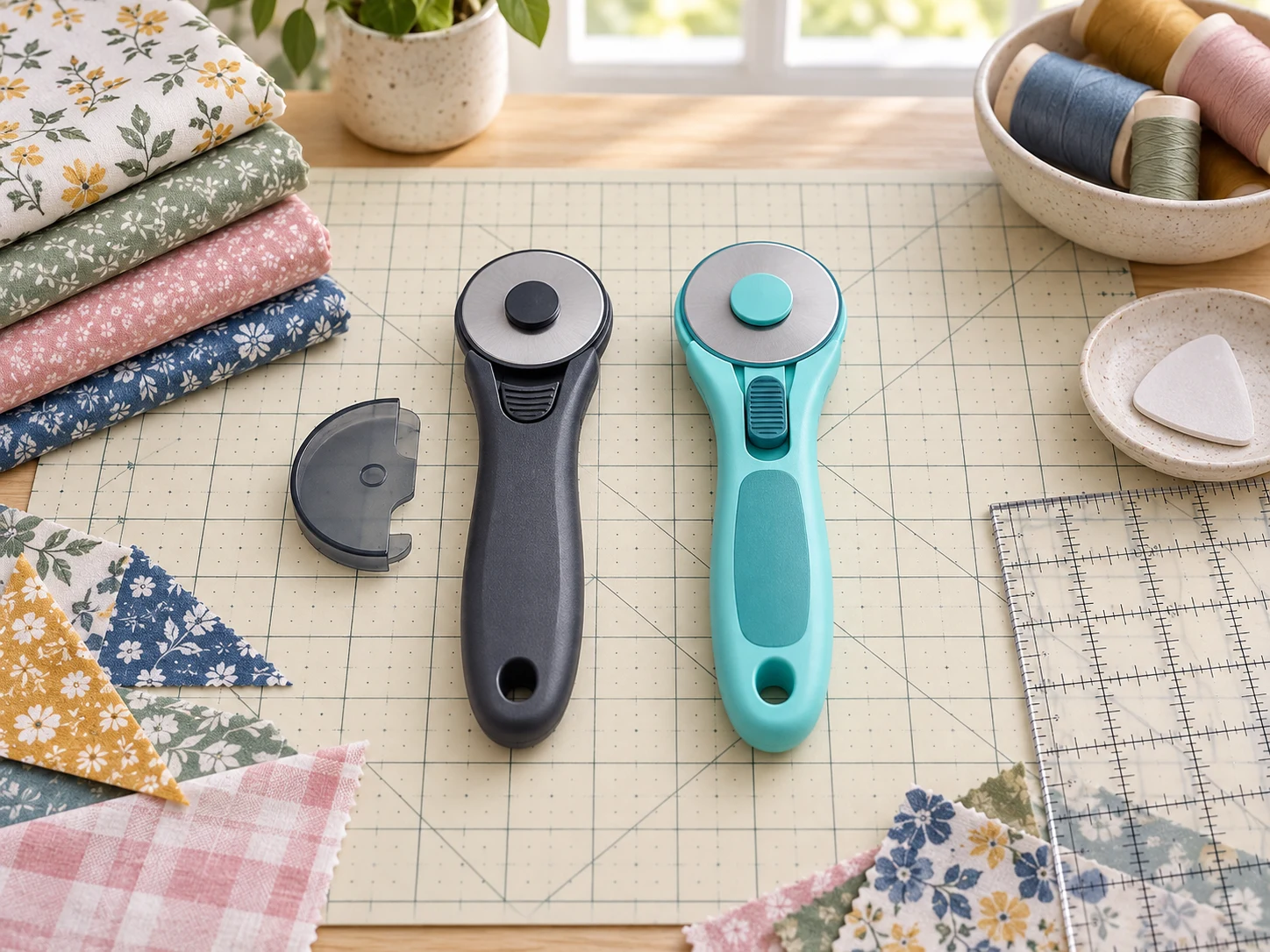
Two unbranded 45 mm rotary cutters, one charcoal and one aqua, on a cream cutting mat with quilting cotton, thread, ruler, and tailor’s chalk for the OLFA RTY-2/G vs RTY-2/C Rotary Cutter comparison
The short answer

Which one should most people buy?

The RTY-2/C is the better default when a simpler blade-change routine matters. The RTY-2/G remains a straightforward classic-handle option.

The OLFA RTY-2/C Quick-Change Rotary Cutter is the more practical pick for most shoppers deciding between these two 45 mm OLFA tools. It keeps the core format the same—a 45 mm rotary cutter intended for fabric work—while changing the part of ownership that repeats over time: replacing the blade. OLFA says the RTY-2/C uses a quick-change system that releases the blade with a sliding lock on the back of the handle rather than the conventional washer-and-nut assembly. That does not promise that blade changes will be frequent for every project, but it is a clear everyday difference when they are needed.

OLFA also states that the RTY-2/C can cut up to eight layers of cotton fabric at once. That specification is useful for a quilter or sewist who regularly cuts stacked cotton pieces. It should not be stretched into a blanket claim about every fabric, mat, blade condition, or cutting technique. Still, it gives the quick-change model a concrete published capability beyond its release mechanism.

The OLFA RTY-2/G Straight Handle Rotary Cutter is not a lesser tool simply because it lacks that release workflow. Its official page describes a 45 mm blade on a classic straight handle, comfortable in either the right or left hand, and names the included RB45-1 blade. Choose it when you want that familiar, uncluttered handle format and do not see the conventional blade-retention arrangement as a friction point. The shared 45 mm diameter keeps both cutters in the same practical lane; the decision is about maintenance rhythm and handle preference, not a jump to a different cutter size.
At a glance

The key specs.

Manufacturer-published blade, handle, and cutting details—not live prices, review scores, or guaranteed results.

Classic-handle option

OLFA RTY-2/G Straight Handle Rotary Cutter

  • ModelRTY-2/G Straight Handle Rotary Cutter
  • Blade45 mm; includes OLFA RB45-1 rotary blade
  • Handle & fitClassic straight handle; described as comfortable in right or left hand
  • Blade-change formatConventional washer-and-nut assembly
  • Main drawbackNo quick-change blade release
  • Buyer-fit summaryFor shoppers who want the traditional 45 mm straight-handle setup
View OLFA RTY-2/G Straight Handle Rotary Cutter on Amazon
Workflow-forward option

OLFA RTY-2/C Quick-Change Rotary Cutter

  • ModelRTY-2/C Quick-Change Rotary Cutter
  • Blade45 mm quick-change rotary blade system
  • Published fabric capacityUp to eight layers of cotton fabric
  • Handle & fitStraight-handle format with built-in blade cover
  • Main drawbackExtra mechanism only matters if quick blade changes suit your routine
  • Buyer-fit summaryFor recurring sewing or quilting work where a release system is useful
View OLFA RTY-2/C Quick-Change Rotary Cutter on Amazon
Fit check

Choose by routine, not cutter snobbery.

Start with the layers you cut, how often you change blades, and the handle you prefer to hold.

Buy the RTY-2/G if

You want a conventional 45 mm straight-handle cutter and value a simple, familiar layout. OLFA describes the RTY-2/G as a 45 mm tool with a classic straight handle and an included RB45-1 blade. For a person making occasional garment adjustments, cutting a few quilt pieces at a time, or keeping one dependable cutter in a sewing kit, that direct format may be all the tool needs to be.

The published right- or left-hand comfort is also meaningful when a shared studio or household does not have a single dominant hand. It is not a personalized fit guarantee, but it makes the model a reasonable starting point for a shopper who wants a conventional handle rather than a specialized grip.

Skip it if: conventional washer-and-nut blade changes are precisely the step you want to avoid when maintaining your cutter.

Buy the RTY-2/C if

You cut fabric often enough that blade replacement belongs in the regular workflow, rather than an occasional task you do not think about. OLFA’s quick-change system is the clearest practical distinction: slide the blade lock and the blade releases without the conventional washer-and-nut assembly. That is a specific convenience, not a vague claim that it works better for everyone.

The product page also publishes a capacity of up to eight layers of cotton fabric. That makes this model especially relevant for repeated quilting cuts and stacked cotton pieces. Check the material you actually use, because heavier, plush, or non-cotton fabrics can behave differently from the stated cotton-layer example.

Skip it if: you only need a basic classic cutter and do not expect the quick-release design to improve your own process.

Fit check: Both products are 45 mm rotary cutters. Before checkout, compare your typical fabric, cutting mat, hand position, replacement-blade plan, and the exact included parts instead of assuming one handle format fits every project.
Side by side

Compare the trade-offs.

A focused table for the manufacturer-published details that change the purchase decision.

MetricOLFA RTY-2/GOLFA RTY-2/C
Best fitTraditional straight-handle cutter routineRoutine that values quick blade changes
ModelRTY-2/G Straight Handle Rotary CutterRTY-2/C Quick-Change Rotary Cutter
Blade size45 mm; includes RB45-1 blade45 mm quick-change system
Published cotton-layer detailNot stated on the cited product pageUp to eight layers of cotton fabric
Blade-change formatConventional washer-and-nut assemblySliding blade-lock release
Controls & fitClassic straight handle; right- or left-hand comfort statedStraight-handle format with built-in blade cover
Main drawbackNo quick-change releaseQuick-change feature may not add value to an occasional routine
Buyer-fit summaryClassic format firstBlade-change workflow first
How we reasoned

The criteria behind the pick.

This comparison focuses on the details that remain relevant after the first cut: blade diameter, included blade information, straight-handle format, published handedness, the blade-change process, blade-cover language, and the stated cotton-layer capability. It does not rely on a live price, review average, unverified sharpness comparison, or a promise about how either cutter will perform on every material.

Matching 45 mm blade size establishes the useful baseline. These are directly comparable cutters for the same general fabric-cutting job, so a shopper does not need to treat the RTY-2/C as a larger or more capable size category. The RTY-2/C earns the recommendation because its quick-change blade release offers a specific workflow advantage without departing from that baseline. Its official page also gives a stated up-to-eight-layers cotton reference for shoppers who routinely stack cotton.

The RTY-2/G has a real advantage for shoppers who prefer a classic straight handle and a conventional assembly. OLFA calls out the included RB45-1 blade and right- or left-hand comfort, which are tangible details rather than marketing abstractions. The absence of a quick-change release does not make it unsuitable; it means its strongest case is the shopper who wants the standard tool format and does not need a different maintenance process.

We avoid declaring either model universally easier, safer, sharper, or better for every quilter. Material type, blade condition, mat condition, hand pressure, project scale, and personal preference all vary. The useful decision is narrower: choose the quick-change model when that release process improves the routine; choose the classic model when it does not.

Source trail

What the recommendation is based on.

RTY-2/G

OLFA’s official RTY-2/G page identifies a 45 mm rotary blade, a classic straight handle described as comfortable in the right or left hand, and the included RB45-1 rotary blade.

Read the official OLFA RTY-2/G page

RTY-2/C

OLFA’s official RTY-2/C page describes its 45 mm quick-change system, sliding blade-lock release, built-in blade cover, and an ability to cut up to eight layers of cotton fabric.

Read the official OLFA RTY-2/C page

Method note: This page uses manufacturer-published product details and Amazon product identifiers for the linked models. It does not use live prices, review scores, third-party testing, or a guarantee about blade life, material performance, hand fit, or suitability for a particular project. Confirm the exact model, included parts, current manufacturer information, and instructions before checkout.
Before checkout

Questions before checkout.

Answers match the FAQ structured data on this page.

Which OLFA 45 mm rotary cutter should most people buy?

Choose the OLFA RTY-2/C Quick-Change Rotary Cutter when you want the same 45 mm format with a blade-change system that removes the conventional washer-and-nut assembly. Choose the OLFA RTY-2/G Straight Handle Rotary Cutter when a simple classic handle and the included RB45-1 blade suit your regular sewing or quilting routine. Both are 45 mm cutters, so the deciding difference is the blade-change workflow rather than blade diameter.

Do both cutters use a 45 mm blade?

Yes. OLFA identifies both the RTY-2/G Straight Handle Rotary Cutter and the RTY-2/C Quick-Change Rotary Cutter as 45 mm models. The straight-handle product page names the included RB45-1 rotary blade, while the quick-change product page describes its 45 mm quick-change system. Confirm the exact listing and included parts before checkout.

What is different about the RTY-2/C blade change?

OLFA describes the RTY-2/C as a quick-change cutter: sliding the blade lock on the back of the handle releases the blade, instead of using the conventional washer-and-nut assembly. That is the primary functional reason to choose it over the RTY-2/G. It does not make a claim about how often every shopper will need to change a blade.

Can either cutter be used for multiple cotton layers?

OLFA states that its 45 mm RTY-2/C Quick-Change Rotary Cutter can cut up to eight layers of cotton fabric at a time. Material thickness, fabric type, blade condition, cutting mat, and technique vary, so that published figure is a product capability rather than a guarantee for every stack or material.

Is the RTY-2/G only for one hand?

No. OLFA describes the RTY-2/G straight handle as comfortable in the right or left hand. Hand comfort is personal, so shoppers should compare the exact handle shape, grip preference, and the way they typically hold a cutter before deciding.