Head-to-head kettle charcoal grill comparison

Weber Smokey Joe vs Cuisinart CCG-190

Weber’s 14-inch Smokey Joe lists a 147-square-inch cooking surface, a Tuck-N-Carry lid lock, porcelain-enamel bowl and lid, an ash catcher, and lid-and-bowl dampers. Cuisinart’s 14-inch CCG-190 lists 196 square inches of cooking space, a 4.2-pound weight, dual vents, three lid locks, an enamel-coated firebox, and an ash base. The better choice is about kettle design, published cooking space, and carry routine—not a vague promise about better food.

As an Amazon Associate, Worth Adding may earn from qualifying purchases.

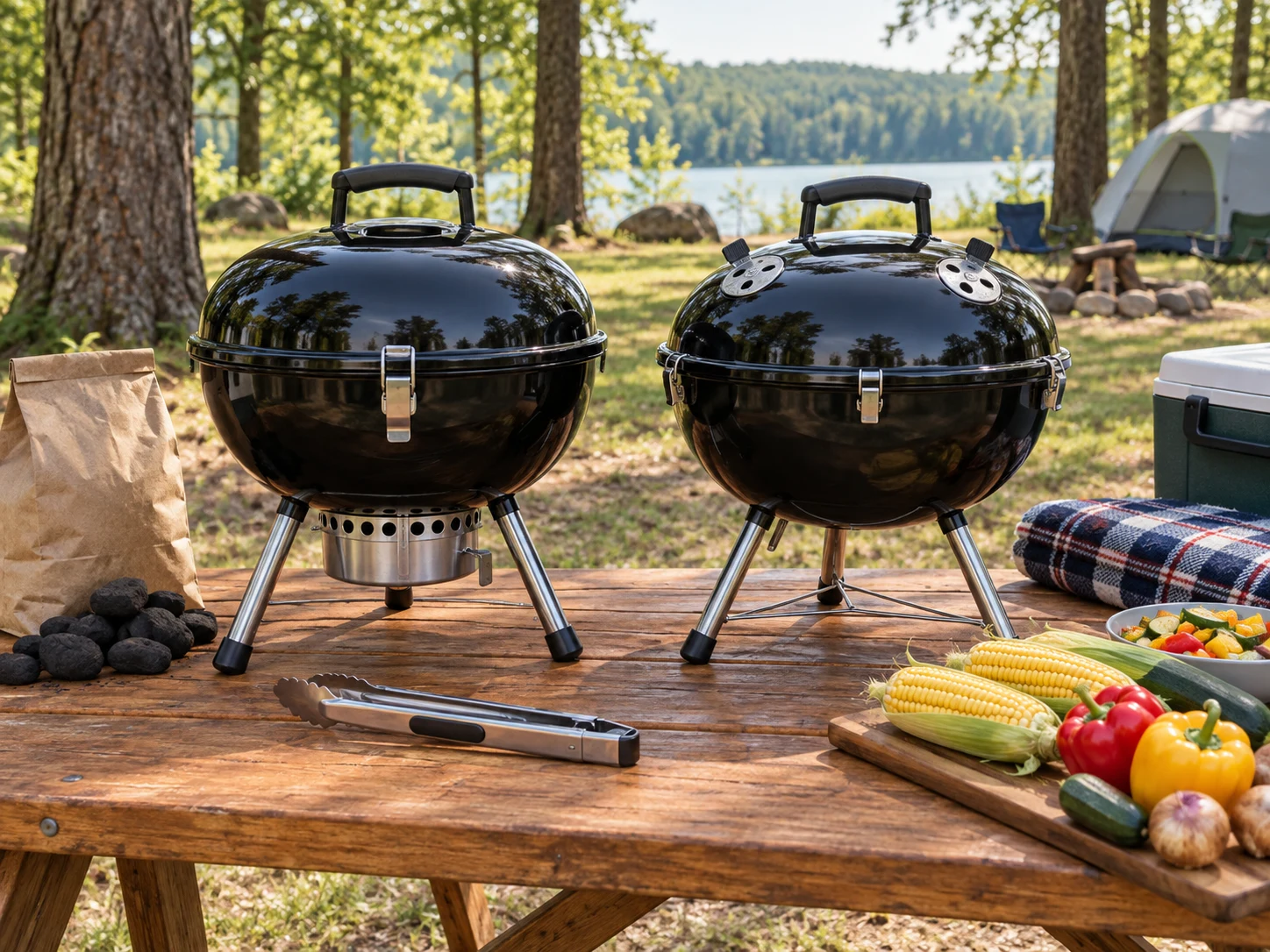
Two unbranded 14-inch kettle charcoal grills on a picnic table with charcoal, tongs, corn, vegetables, a blanket, and a cooler for the Weber Smokey Joe vs Cuisinart CCG-190 comparison.
The short answer

Which one should most people buy?

The better default is the compact kettle with durable, explicitly described hardware for regular car-based cookouts.

The Weber Smokey Joe is the more complete default for a buyer who wants a compact kettle for the patio, park, tailgate, or campsite. Weber specifies a porcelain-enamel bowl and lid, a plated-steel cooking grate, a Tuck-N-Carry lid lock that also works as a lid holder, an ash catcher, and both lid and bowl dampers. It also states a 10-year limited warranty for the bowl and lid against rust-through and burn-through. Those are tangible ownership details, not claims about an untested cooking result.

The Cuisinart CCG-190 has a real advantage for the person who prioritizes stated capacity and a low published carry weight. Its official page lists 196 square inches of cooking space—49 more than Weber’s listed 147—and a 4.2-pound weight. Cuisinart also lists a chrome-plated grate, dual adjustable vents, three secure lid locks, an enamel-coated firebox, and a mess-free ash base. Choose it when that larger published grate figure and a clearly stated lightweight carry spec are more useful than the Weber kettle’s materials and warranty.

For most buyers, the Weber’s simple, durable kettle configuration is the stronger reason to choose. Its ash catcher, locking lid, lid-holder function, and published bowl-and-lid warranty describe a practical routine from setup through cleanup. It is not a claim that every meal will cook better. It is a narrower call: for a small charcoal grill that will be packed in a vehicle and used repeatedly, the Smokey Joe offers the better all-around ownership case.
At a glance

The key specs.

Published manufacturer details, kept separate from assumptions about fuel load, meals, weather, or a particular trip.

Kettle default

Weber Smokey Joe

  • ModelSmokey Joe 14-inch Charcoal Grill, 1501695
  • Cooking area147 sq. in. primary and total
  • Dimensions17 H × 14.2 W × 16.5 D in., lid closed
  • Controls & fitTwo aluminum dampers; lid and bowl airflow
  • Main drawbackLess published grate area than Cuisinart
  • Buyer-fit summaryFor a compact kettle with ash catcher and lid lock
View Weber on Amazon
More listed grate space

Cuisinart CCG-190

  • ModelCCG-190, 14-inch Portable Charcoal Grill
  • Cooking area196 sq. in. chrome-plated grate
  • Published weight4.2 lb.
  • Controls & fitDual adjustable vents; three lid locks
  • Main drawbackNo stated bowl-and-lid warranty equivalent
  • Buyer-fit summaryFor a light carry and larger stated grate figure
View Cuisinart on Amazon
Fit check

Choose by routine, not grill snobbery.

Both are 14-inch charcoal options. Start with where the grill rides, how much grate space you need, and which cleanup details you value.

Buy the Weber Smokey Joe if

Your grill usually travels by car to a patio, campsite, park, beach, or tailgate and you want a classic small kettle with clearly described hardware. The Tuck-N-Carry lid lock keeps the lid secured for transport and doubles as a holder while cooking. Weber also lists an ash catcher, plated-steel grate, porcelain-enamel bowl and lid, and two lid dampers with bowl dampers. Those details make its everyday setup-and-cleanup routine easy to understand.

Skip it if: The Cuisinart’s 49 additional published square inches of grate space or its 4.2-pound published weight is central to your decision. Weber does not list a product weight on the official page used here.

Buy the Cuisinart CCG-190 if

You want the larger published cooking-area figure in a compact 14-inch grill and value a clearly stated low weight. Cuisinart lists 196 square inches, 4.2 pounds, a chrome-plated grate, dual adjustable vents, three lid locks, an enamel-coated firebox, and an ash base. The three locks are a direct transport feature, while the ash base is a direct cleanup feature.

Skip it if: You prefer Weber’s porcelain-enamel kettle construction, Tuck-N-Carry lid-holder setup, or its stated 10-year bowl-and-lid warranty. Cuisinart’s official page does not make those same claims.

Quick fit check: Choose Cuisinart when published grate area and stated weight decide the purchase. Choose Weber when you want the more traditional kettle package and its explicit lid, ash, and warranty details.
Side by side

Compare the trade-offs.

Only published, decision-relevant differences belong in the table.

MetricWeber Smokey JoeCuisinart CCG-190
Best fitCompact kettle ownership and simple ash managementLarger stated grate area and published light carry weight
ModelSmokey Joe 14-inch, 150169514-inch Portable Charcoal Grill, CCG-190
Cooking area147 sq. in. primary and total196 sq. in.
Published dimensions17 H × 14.2 W × 16.5 D in. closedNot used for this comparison
Published weightNot listed on official page used4.2 lb.
ControlsTwo aluminum dampers; lid and bowl dampersDual adjustable vents
Transport & cleanupTuck-N-Carry lid lock and ash catcherThree lid locks and ash base
Buyer fit summaryDurable kettle routine with stated warrantyCapacity-first, light-carry compact grill
How we reasoned

The criteria behind the pick.

This is not a broad contest about which charcoal grill makes better food. The manufacturer pages describe different purchase cases. Cuisinart lists 196 square inches of cooking space, while Weber lists 147 square inches. The 49-square-inch difference is meaningful for a shopper trying to maximize stated grate area in a small format. Cuisinart also lists the CCG-190 at 4.2 pounds, a useful hard number when a buyer expects to carry the grill from car to site.

We weighted the Weber’s ownership hardware more heavily for the general recommendation. Its product page names the Tuck-N-Carry lid lock, which also serves as a lid holder, plus an ash catcher, a porcelain-enamel bowl and lid, a plated-steel cooking grate, and two rust-resistant aluminum dampers. Weber also publishes a 10-year limited warranty for the bowl and lid. These details identify a familiar kettle workflow without requiring a claim about heat performance that the sources do not establish.

The Cuisinart remains the sharper pick when its numbers and compact features map directly to the routine. Its official description names a chrome-plated grate, dual vents, three secure lid locks, enamel-coated firebox, and ash base. That is enough to make the case for a buyer who wants more stated grate area, knows a low listed carry weight matters, and does not need the Weber’s particular lid-holder or warranty package.

We did not infer cook times, temperature precision, smoke output, durability beyond stated materials and warranty, or a serving count from these specifications. Fuel, weather, food, setup, and use vary. The recommendation is deliberately practical: choose Weber for the compact kettle package; choose Cuisinart when published area and carry weight take priority.

Before choosing, measure the spot where the grill will ride and the surface where it will sit. Weber publishes its closed dimensions, while this comparison intentionally does not substitute a retailer dimension for Cuisinart when the manufacturer page gives a different set of decision details. Check the exact finish, included parts, and current manufacturer instructions for the listing you intend to buy. The point is not to turn a compact kettle into a full-size grill; it is to choose the small, portable format whose stated hardware best fits the routine you actually have.

Source trail

What the recommendation is based on.

Weber Smokey Joe

Weber’s official product page lists a 147-square-inch cooking surface, 17 × 14.2 × 16.5-inch closed dimensions, porcelain-enamel bowl and lid, plated-steel grate, Tuck-N-Carry lid lock, ash catcher, two rust-resistant aluminum dampers, and its stated bowl-and-lid warranty.

Read the official Weber product page

Cuisinart CCG-190

Cuisinart’s official product page lists 196 square inches of cooking space, a 4.2-pound weight, chrome-plated grate, dual adjustable vents, three lid locks, enamel-coated firebox, and ash base. Those details establish its capacity-first, light-carry angle.

Read the official Cuisinart product page

Method note: This page uses the manufacturers’ published product details and Amazon product identifiers for the linked models. It does not use live pricing, review scores, performance testing, or a compatibility guarantee. Confirm the exact model, finish, availability, included pieces, and manufacturer instructions before checkout or use.
Before checkout

Questions before checkout.

Answers match the FAQ structured data on this page.

Which kettle charcoal grill is the better pick for most people?

The Weber Smokey Joe is the better pick for most people choosing between these compact kettle charcoal grills. Weber lists a 147-square-inch cooking area, a Tuck-N-Carry lid lock that can also hold the lid, an ash catcher, and lid and bowl dampers. Choose the Cuisinart CCG-190 when its listed 196 square inches of cooking area and 4.2-pound published weight are more important than the Weber’s porcelain-enamel kettle construction and stated 10-year bowl-and-lid warranty.

Which grill has more published cooking area?

Cuisinart lists 196 square inches of cooking space for the CCG-190. Weber lists 147 square inches of primary and total cooking area for the Smokey Joe. That is a 49-square-inch difference in the manufacturers’ published figures; grate area is not a guarantee of a particular serving count or cooking result.

Which grill is easier to carry?

Cuisinart lists the CCG-190 at 4.2 pounds and describes three secure lid locks. Weber describes the Smokey Joe as compact and lightweight and gives it a Tuck-N-Carry lid lock, but the official product page used here does not list a product weight. If a published weight is the deciding criterion, Cuisinart supplies the clearer figure.

Do both grills provide airflow control?

Yes. Weber lists two rust-resistant aluminum dampers and describes lid and bowl dampers for heat control on the Smokey Joe. Cuisinart describes a dual venting system with adjustable vents on the CCG-190. These are published control features, not a promise of a specific temperature or food outcome.

What is the practical difference between these two kettle grills?

The Smokey Joe is a porcelain-enamel kettle with a Tuck-N-Carry lid lock, ash catcher, plated-steel grate, and a stated 10-year limited bowl-and-lid warranty. The CCG-190 is a compact 14-inch grill with a larger listed grate area, chrome-plated grate, enamel-coated firebox, ash base, dual vents, and three lid locks. Pick by cooking-space needs, carry routine, cleanup features, and the exact model details rather than an assumed performance ranking.

Weber Go-AnywhereBest portable charcoal grill pick
Amazon
Amazon