Head-to-head 1kWh portable power station comparison

Anker SOLIX C1000 Gen 2 vs EcoFlow DELTA 3 Plus

The Anker SOLIX C1000 Gen 2 and EcoFlow DELTA 3 Plus are both compact 1,024Wh LiFePO4 power stations for outage prep, camping, RV weekends, and device backup. Anker is the stronger default if you want the lighter box with higher rated AC output. EcoFlow is the better alternative if expandable capacity and a deeper power-management ecosystem matter.

As an Amazon Associate, Worth Adding earns from qualifying purchases. We may earn a commission if you buy through our links.

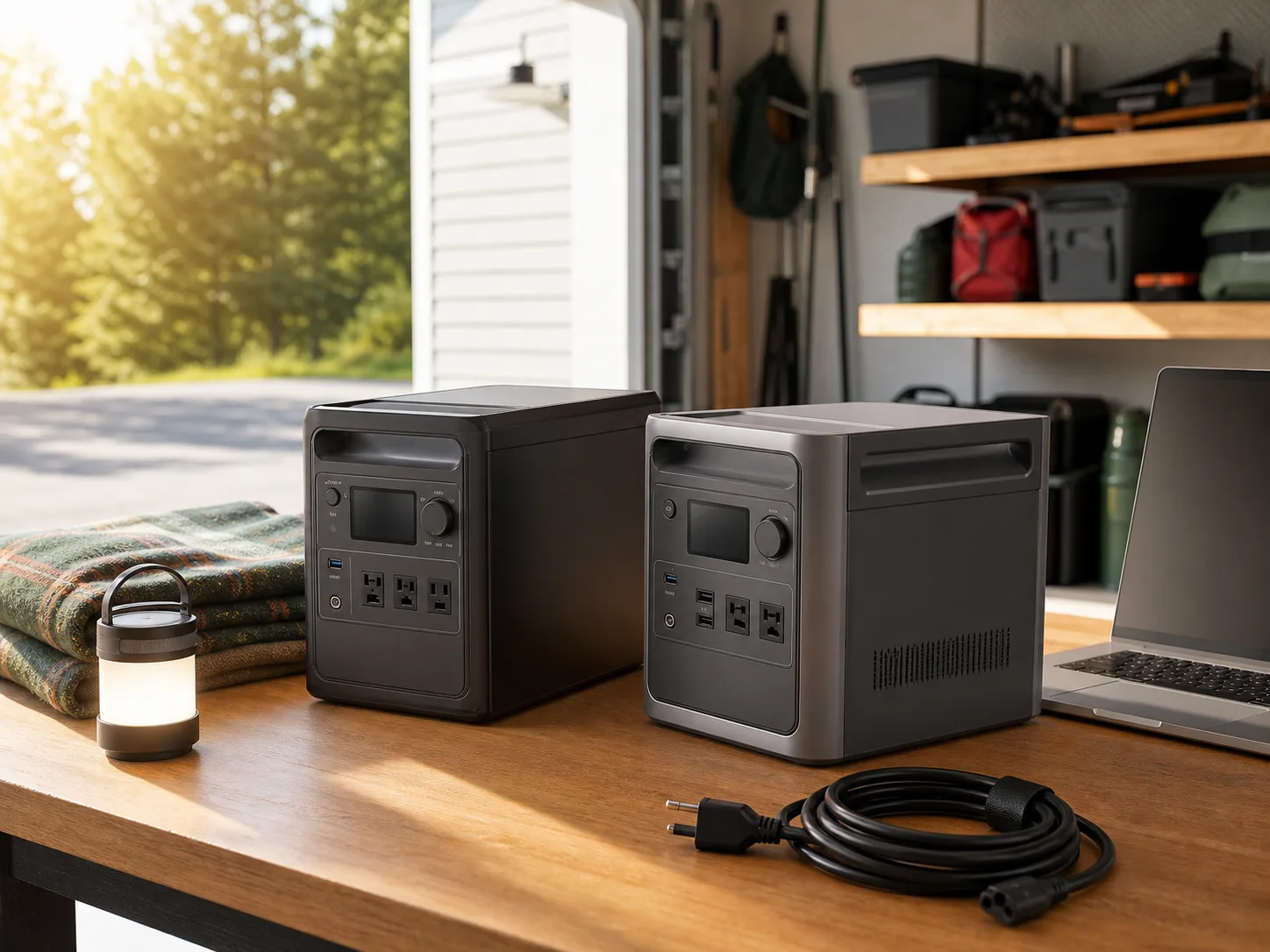
Two compact portable power stations on a workbench with charging cables, a laptop, and camping gear in natural light for the C1000 Gen 2 vs DELTA 3 Plus comparison
Last checked
WinnerAnker SOLIX C1000 Gen 2
Best alternativeEcoFlow DELTA 3 Plus
Verdict

Which one should most people buy?

Choose Anker if you want the stronger grab-and-go 1kWh station: 2,000W rated AC output, 49-minute full recharge mode, 10 ms UPS switching, and a lighter 24.9 lb body. Choose EcoFlow if expansion and ecosystem flexibility are worth carrying a little more weight.

Anker is the better first pick when you want portable power, not a platform project.

Both stations use LiFePO4 batteries, both list 1,024Wh capacity, both support app control, and both can act as standby backup for selected loads. Anker wins the straight 1kWh matchup because it gives you more rated AC output, faster published full recharge, a lighter body, and a straightforward 10-port layout.

EcoFlow is the better buy for a different shopper. DELTA 3 Plus has a stronger expansion story, higher published total solar input in the manual, broad DELTA accessory compatibility, and a PC/NAS-oriented Power Manager workflow. If you already own EcoFlow batteries, alternator charging gear, or plan to grow beyond one box, that ecosystem can matter more than Anker's spec edge.

At a glance

The key specs

Best self-contained 1kWh pick

Anker SOLIX C1000 Gen 2

C1000 Gen 2 is the better fit if you want a compact power station that can handle heavier appliance bursts without immediately stepping into a 2kWh class unit. Anker lists 1,024Wh capacity, 2,000W rated AC output, 3,000W peak output, 49-minute UltraFast recharge, 600W max solar input, 10 ms UPS switching, and 4,000 cycles to at least 80% capacity.

Capacity
1,024Wh LiFePO4
AC output
2,000W rated; 3,000W peak
Size and weight
15.12 in W x 8.19 in D x 9.61 in H; 24.9 lb
Best for
Shoppers who want one lighter 1kWh station with strong AC output, fast wall charging, and no immediate need for expansion batteries.
Best expandable alternative

EcoFlow DELTA 3 Plus

DELTA 3 Plus is the stronger alternative if you want to grow the system over time. EcoFlow lists 1,024Wh capacity, 1,800W rated AC output, 3,600W surge output, under-10 ms UPS behavior, 56-minute full recharge with 1,500W AC input on its US product page, and compatibility with several DELTA extra-battery paths.

Capacity
1,024Wh LiFePO4
AC output
1,800W rated; 3,600W surge
Size and weight
Approx. 15.7 in D x 8.0 in W x 11.2 in H; 27.6 lb
Best for
Shoppers who want expandable capacity, EcoFlow accessories, higher published total solar input, and computer/NAS-friendly UPS management.
Buyer guide

Choose by the backup job.

A 1kWh station can be great for laptops, router/modem gear, lights, CPAP-style loads after checking requirements, mini-fridges, camping devices, and short outage coverage. It is not a whole-home battery, and the right choice depends on load size, recharge plan, solar setup, and whether you will expand later.

Anker SOLIX C1000 Gen 2

Buy this if / skip this if

Buy this if
  • You want the stronger rated inverter in this head-to-head for tools, kitchen appliances, or mixed outage loads that may exceed 1,800W.
  • You value a lighter 24.9 lb body because the station will move between garage, car, campsite, and house.
  • You want a fast wall-recharge routine and are comfortable enabling UltraFast charging in the Anker app when speed matters.
Skip this if
  • You already own EcoFlow batteries or plan to build a larger modular DELTA system.
  • You need the highest published solar-input ceiling in this matchup for a semi-fixed off-grid setup.
  • You want computer/NAS UPS software integration more than simple standby backup behavior.
EcoFlow DELTA 3 Plus

Buy this if / skip this if

Buy this if
  • You plan to expand beyond 1kWh with DELTA extra batteries or related EcoFlow charging accessories.
  • You want EcoFlow's Power Manager/NAS-oriented UPS workflow for a desk, network closet, or small server setup.
  • Your solar plan can actually use EcoFlow's higher published total solar input with compatible panels and correct voltage limits.
Skip this if
  • You want the highest rated AC output in the smallest self-contained 1kWh box here.
  • You will carry the station often and care about every few pounds.
  • You are not buying extra batteries, alternator charging gear, or solar panels, because EcoFlow's ecosystem advantage will matter less.
1,024Wh is not 1,024Wh at the outlet

Inverter losses and reserve behavior reduce usable AC energy. A 100W device will not reliably run for 10.2 hours just because the battery label says 1,024Wh.

Rated output changes appliance fit

Anker's 2,000W rating gives more room for brief kitchen, tool, or appliance loads. EcoFlow's 1,800W rating is still substantial, but load math matters before plugging in heaters, kettles, or compressors.

Solar wattage only helps in the right setup

EcoFlow publishes a higher total solar-input ceiling, while Anker lists 600W max. Either way, panel angle, weather, cable compatibility, voltage limits, and real sun exposure decide whether that number matters.

Before you buy

Map the load before picking the brand.

  • Add the running watts and startup surge for the devices you actually need during an outage; space heaters and electric cooking gear drain 1kWh stations quickly.
  • For refrigerators, medicine storage, CPAP machines, routers, and NAS gear, test your exact equipment before relying on any portable station overnight.
  • Check the solar-panel voltage range and connector requirements before assuming panels from another kit will work safely.
  • Do not store a power station empty in a closet for storm season. Follow the maker's storage and maintenance guidance so the battery is ready when needed.
Side by side

Compare the trade-offs.

Both are serious 1kWh-class stations. The deciding split is straightforward: Anker is the stronger standalone box, while EcoFlow is the stronger expandable ecosystem.

Key buying trade-offs for the Anker SOLIX C1000 Gen 2 and EcoFlow DELTA 3 Plus, based on official manufacturer specifications and product-specific Amazon pages checked May 16, 2026.
MetricAnker SOLIX C1000 Gen 2EcoFlow DELTA 3 Plus
Best fitWinnerMost shoppers who want a self-contained 1kWh station with higher rated AC output and less weight.Shoppers who want expandable capacity, EcoFlow accessory compatibility, and a more software-forward UPS workflow.
Battery capacity1,024Wh1,024Wh
Battery chemistry and cycle lifeLiFePO4; Anker lists at least 80% capacity after 4,000 cyclesLFP/LiFePO4; EcoFlow manual lists 80%+ capacity after 4,000 cycles
Rated AC output2,000W rated; 3,000W peak1,800W rated; 3,600W surge
Recharge speed49-minute full recharge with UltraFast mode enabled in the Anker appEcoFlow product page lists 0-100% in 56 minutes with 1,500W AC input
Solar input600W max; 60V max listed by AnkerManual lists 500W max per XT60 port, 1,000W total
UPS behavior10 ms UPS backup listed by AnkerManual describes standby UPS transfer time of 10 ms; product page lists under 10 ms UPS
USB-C output140W max on USB-C 2140W max per USB-C port; 280W total listed in manual
Dimensions and weight15.12 x 8.19 x 9.61 in; 24.9 lbApprox. 8.0 x 15.7 x 11.2 in; 27.6 lb
ExpansionAnker's FAQ says C1000 Gen 2 does not include expansion to keep weight and size down.EcoFlow lists 1-5kWh expandable capacity with compatible DELTA extra-battery paths.
Main drawbackLess appealing if you know you will add expansion batteries or build around a larger ecosystem.Heavier and lower rated AC output in the direct 1kWh box-to-box comparison.
How we compared

The criteria behind the pick.

We compared official capacity, battery chemistry, rated AC output, surge output, recharge claims, UPS behavior, solar input limits, USB-C output, dimensions, weight, expansion path, app/software dependency, and realistic home/camping use. We omitted ratings, review counts, live price claims, coupons, and availability because those details change often.

Specs checked

For Anker SOLIX C1000 Gen 2, we used Anker's product and C1000 Gen 2 spec pages for capacity, output, recharge speed, UPS timing, solar input, dimensions, weight, USB-C output, app behavior, and cycle-life claims. For EcoFlow DELTA 3 Plus, we used EcoFlow's US product page and the DELTA 3 Plus manual for capacity, AC output, UPS transfer time, USB-C output, dimensions, weight, solar input, battery chemistry, cycle life, storage, and maintenance guidance.

Fit checked

We weighted the decision around actual ownership jobs: outage loads, camping loads, how often the station moves, how quickly it can be refilled, whether solar is part of the plan, and whether the buyer is building one portable box or a larger modular system.

Best fit

Anker SOLIX C1000 Gen 2 is the safer one-box recommendation. EcoFlow DELTA 3 Plus is the better feature pick when expansion and EcoFlow's wider accessory ecosystem are part of the plan.

Source trail

What the recommendation is based on.

FAQ

Questions before checkout.

Which portable power station is better for most people?

Anker SOLIX C1000 Gen 2 is the better default for most 1kWh shoppers. It has the same listed capacity as DELTA 3 Plus, higher rated AC output, faster published full recharge, a lighter body, and a simpler one-box value case.

Why choose EcoFlow DELTA 3 Plus instead?

Choose EcoFlow if you want expandable capacity, EcoFlow extra-battery compatibility, higher published total solar input, or the PC/NAS-oriented Power Manager workflow. It is the better platform pick, even though Anker is the stronger standalone box.

Can either unit run a whole house?

No. These are portable 1,024Wh stations for selected loads, not whole-home batteries. They can be useful for routers, laptops, lights, camping devices, and short appliance backup, but high-draw heating and cooking loads drain this class quickly.

Are these safe replacements for a medical UPS?

Treat them as standby backup tools, not medical-grade life-support power. Check your device maker's wattage, surge behavior, runtime needs, and backup recommendations before relying on any portable station for medical equipment.

Should solar input decide the purchase?

Only if you will buy compatible panels and use them in strong sun. EcoFlow publishes higher total solar input, while Anker's 600W ceiling is still useful for a portable setup. Panel voltage, weather, cable fit, and placement matter as much as the headline wattage.

More from Worth Adding

Keep browsing comparisons.

Best overall

Anker SOLIX C1000 Gen 2

It is the better standalone 1kWh portable power station for most buyers because it pairs 1,024Wh capacity with higher rated AC output, fast wall charging, 10 ms UPS behavior, and the lighter body in this matchup.

Last checked: . Retailer availability, coupons, delivery estimates, and other listing details can change without notice.

Decision notes
Best overallAnker SOLIX C1000 Gen 2
Best expandable alternativeEcoFlow DELTA 3 Plus
Data sourceOfficial specs plus Amazon product pages
Last checked
C1000 Gen 2 Best 1kWh pick
Amazon