Head-to-head beginner digital piano comparison

Yamaha P-143 vs Roland FP-10

The Roland FP-10 is the better beginner 88-key digital piano for most learners because it pairs Roland's PHA-4 Standard keyboard with escapement and Ivory Feel, 96-voice polyphony, 36 total tones, Bluetooth MIDI, and Roland Piano App control. The Yamaha P-143 is the better alternative if you want the lighter board, Yamaha's compact P-Series layout, USB audio interface support, and a straightforward practice instrument.

As an Amazon Associate, Worth Adding earns from qualifying purchases. We may earn a commission if you buy through our links.

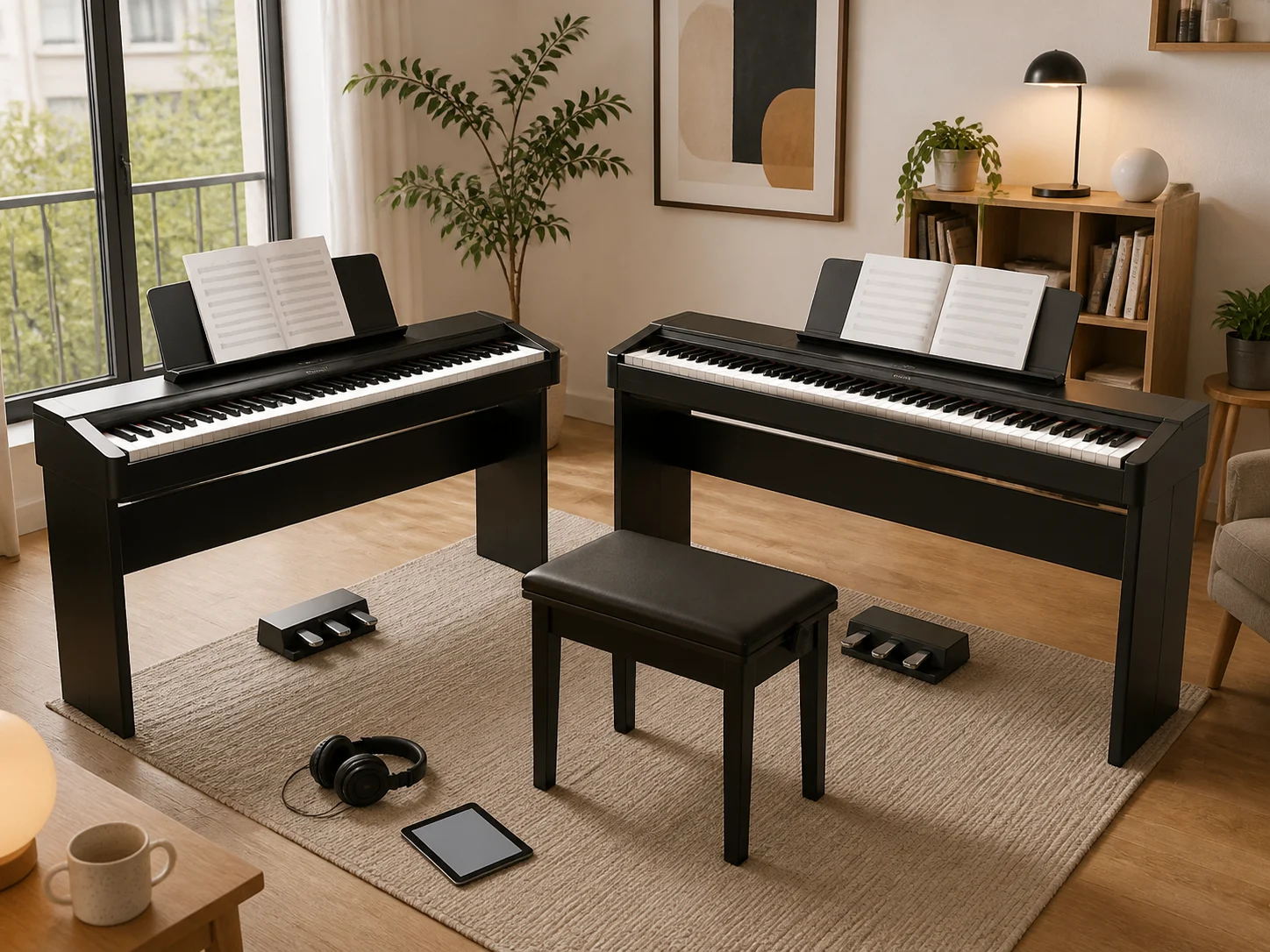
Two slim unbranded black 88-key digital pianos in a bright apartment music corner with headphones, a sustain pedal, a bench, a tablet, and sheet music for the Yamaha P-143 vs Roland FP-10 comparison
Last checked
Winner Roland FP-10
Lighter USB-audio option Yamaha P-143
Verdict

Which one should most people buy?

Choose the Roland if key feel, Bluetooth MIDI practice flow, and a room-friendly learning piano matter most. Choose the Yamaha if lower weight, USB audio, and a cleaner no-Bluetooth practice setup are higher priorities.

Buy the FP-10 unless Yamaha's lighter USB-audio setup is the point.

The FP-10 wins for the buyer who wants a convincing beginner piano feel without stepping up to a larger or more expensive board. Its PHA-4 action, escapement, Ivory Feel key texture, higher polyphony, and Bluetooth MIDI support give students more room to grow.

The P-143 is still the right pick for some shoppers. Yamaha lists a lighter 24 lb 8 oz body, 7 W x 2 speakers, 64-note polyphony, USB audio interface support, USB to Host, 10 voices, Duo mode, and a simple compact cabinet that is easier to move between rooms.

At a glance

The key specs.

Lighter USB-audio option

Yamaha P-143

A compact P-Series portable piano for beginners who want Yamaha's GHC weighted keyboard, a lighter body, USB audio/MIDI connection, and simple home-practice controls.

Keyboard
88 keys, GHC keyboard with matte black keytops
Piano sound
Yamaha CFIIIS tone generator
Polyphony
64 notes maximum
Voices
10 preset voices
Connectivity
USB to Host, USB audio interface, headphone jack, sustain pedal input
Speakers
7 W x 2, oval 12 cm x 8 cm x 2
Size and weight
52-3/16 in W x 10-9/16 in D x 5-1/16 in H; 24 lb 8 oz
Best for
Apartment practice, easy room-to-room moves, wired app/recording workflows, and shoppers who want the lighter board.
Best key-feel pick

Roland FP-10

A compact Roland portable piano for learners who want PHA-4 key feel, Bluetooth MIDI, richer app control, more tones, and higher polyphony in a still-manageable 88-key cabinet.

Keyboard
88 keys, PHA-4 Standard with escapement and Ivory Feel
Piano sound
SuperNATURAL Piano Sound
Polyphony
96 voices maximum
Tones
36 total tones; 15 accessible from the front panel
Connectivity
Bluetooth MIDI, USB Computer port, headphone/output jack, damper pedal input
Speakers
6 W x 2, 12 cm x 2
Size and weight
50-9/16 in W x 10-3/16 in D x 5-9/16 in H; 27 lb 13 oz with music rest detached
Best for
Learning piano feel, wireless MIDI app practice, lesson mode, headphone practice, and students likely to outgrow a basic action.
Buyer guide

Choose by practice setup.

Both are compact 88-key digital pianos with built-in speakers, headphone practice, included basics, and optional stand/pedal upgrades. The decision is mostly key feel and wireless learning tools versus lighter carry and wired USB audio.

Yamaha P-143

Buy this if / skip this if

Buy this if
  • You want the lighter piano in this comparison for moving between a bedroom, living room, closet, or lessons.
  • You plan to connect by cable and value Yamaha's listed USB audio interface for recording or app use.
  • You want a simple 10-voice practice piano with Duo mode, metronome, transpose, tuning, and fewer app distractions.
Skip this if
  • You want textured keys with escapement for a more acoustic-piano-like beginner action.
  • You want Bluetooth MIDI for wireless practice apps or a cleaner tablet setup.
  • You expect to use many onboard tones or want the higher 96-voice polyphony listed by Roland.
Roland FP-10

Buy this if / skip this if

Buy this if
  • You want the richer learning feel of PHA-4 Standard keys with escapement and Ivory Feel texture.
  • You want Bluetooth MIDI and Roland Piano App control for lessons, metronome settings, and app-based practice.
  • You care about 96-voice polyphony, 36 total tones, Twin Piano mode, and a piano that can stay useful after the first months.
Skip this if
  • You need the lighter board because you move the piano often or store it after every practice session.
  • You specifically want Yamaha's USB audio interface support for a direct wired audio workflow.
  • You are buying for a very simple, no-wireless home setup where Yamaha's smaller feature set is a benefit.
Keyboard action

Action matters more than tone count for most beginners. Roland's PHA-4 Standard with escapement and Ivory Feel is the reason the FP-10 is the default pick for learners focused on technique.

Connectivity

Yamaha's USB audio interface is useful for direct wired recording. Roland's Bluetooth MIDI is useful for practice apps and cable-light lessons, but Roland notes Bluetooth can vary by country.

Portability

A few pounds matter if the piano lives under a bed or in a closet between sessions. Yamaha is the easier lift; Roland asks you to accept more weight for the key action and wireless MIDI.

Before you buy

Check these digital piano fit points first.

  • Budget for a stable stand and bench if you do not already have them; tabletop practice can put wrists and shoulders in a poor position.
  • Check headphone plug size and adapter needs before buying for quiet practice.
  • Confirm the app workflow on your phone or tablet, especially if Bluetooth MIDI or USB app control is part of the decision.
  • Plan pedal upgrades early if half-pedaling matters for lessons; both ecosystems list optional pedals beyond the basic included switch.
Side by side

Compare the trade-offs.

The table focuses on official specs that change everyday ownership: keyboard action, tone engine, polyphony, app connection, speakers, headphone setup, weight, stand/pedal path, and buyer fit.

Yamaha P-143 vs Roland FP-10 official spec comparison.
Metric Yamaha P-143 Roland FP-10
Best fit Lighter compact practice piano, USB audio/MIDI cable workflows, simple controls, and Yamaha P-Series familiarity. WinnerMost beginner learners who want stronger key feel, Bluetooth MIDI, more tones, and higher polyphony.
Keyboard88-key GHC keyboard with matte black keytops88-key PHA-4 Standard keyboard with escapement and Ivory Feel
Piano soundYamaha CFIIISSuperNATURAL Piano Sound
Polyphony64 notes maximum96 voices maximum
Voices / tones10 preset voices36 total tones; 15 front-panel tones
Practice modesDual/layer and Duo listedWhole, Dual, and Twin Piano listed
ConnectivityUSB to Host, USB audio interface, headphone jack, sustain pedal inputBluetooth MIDI, USB Computer port, update port, headphone/output jack, damper pedal input
Speakers7 W x 2, oval 12 cm x 8 cm x 26 W x 2, 12 cm x 2
Weight24 lb 8 oz27 lb 13 oz with music rest detached
Main drawbackNo Bluetooth listed, lower polyphony, fewer voices, and a less advanced action than Roland's PHA-4 setup.Heavier than the Yamaha and not the better pick if USB audio interface support is your required recording path.
Buyer fit summaryThe P-143 is the lighter, simpler wired-workflow pick.The FP-10 is the better all-around learning piano pick.
How we compared

The criteria behind the pick.

We compared manufacturer-published product specs and support pages, then weighted the differences that affect a beginner's daily practice: keyboard action, sound engine, polyphony, speaker setup, headphone practice, app and USB workflow, weight, included accessories, and upgrade path. Prices, ratings, review counts, coupons, and availability were intentionally left out because they can change and were not needed for this decision.

Specs checked

Keyboard type, tone engine, polyphony, voice count, modes, metronome, USB and Bluetooth support, speakers, dimensions, weight, included accessories, optional stands, and pedal path were checked against official materials.

Fit checked

The recommendation favors the piano that helps a new player build technique at home without creating avoidable setup friction around headphones, apps, stands, pedals, or storage.

Best fit

Pick Roland for key feel and wireless MIDI practice. Pick Yamaha for lighter carry, USB audio interface support, and a simpler cable-led practice setup.

Source trail

What the recommendation is based on.

Yamaha P-143

The P-143 is the better fit when you want the lighter digital piano, Yamaha's compact P-Series form, 7 W x 2 speakers, USB audio interface support, and a simple 10-voice practice instrument.

Sources: Yamaha P-143 official specs; product-specific Amazon listing checked June 7, 2026.

Roland FP-10

The FP-10 is the better fit when key action and practice-app flexibility matter more than lowest carry weight, thanks to PHA-4 Standard keys, SuperNATURAL Piano sound, Bluetooth MIDI, and 96-voice polyphony.

Sources: Roland FP-10 official specs; product-specific Amazon listing checked June 7, 2026.

FAQ

Questions before checkout.

Which digital piano is better for most beginners?

The Roland FP-10 is the better default for most beginners who care about a more acoustic-feeling action, Bluetooth MIDI practice apps, and a stronger long-term learning feel. The Yamaha P-143 is better if you want the lighter instrument, USB audio interface support, and a simpler control set.

Does either piano have Bluetooth audio?

Roland lists Bluetooth MIDI for the FP-10, with availability depending on country, and Yamaha lists no Bluetooth on the P-143 spec sheet. Neither official spec page should be treated as promising Bluetooth audio playback for this head-to-head.

Which one is easier to move around?

The Yamaha P-143 is easier to move because Yamaha lists it at 24 lb 8 oz, while Roland lists the FP-10 at 27 lb 13 oz with the music rest detached. Both still need a stand, bench, power adapter, and pedal planning.

Did this comparison use prices or customer ratings?

No. Prices, coupons, ratings, review counts, and availability were left out because they can change quickly and were not needed for this official-spec buying decision.

The Roland FP-10 is the better buy for most beginner piano learners who want the key action, Bluetooth MIDI practice path, and higher polyphony to matter beyond the first few months.

Roland FP-10 Better key feel.
Amazon