Head-to-head acoustic guitar comparison

Yamaha FG800 vs FS800

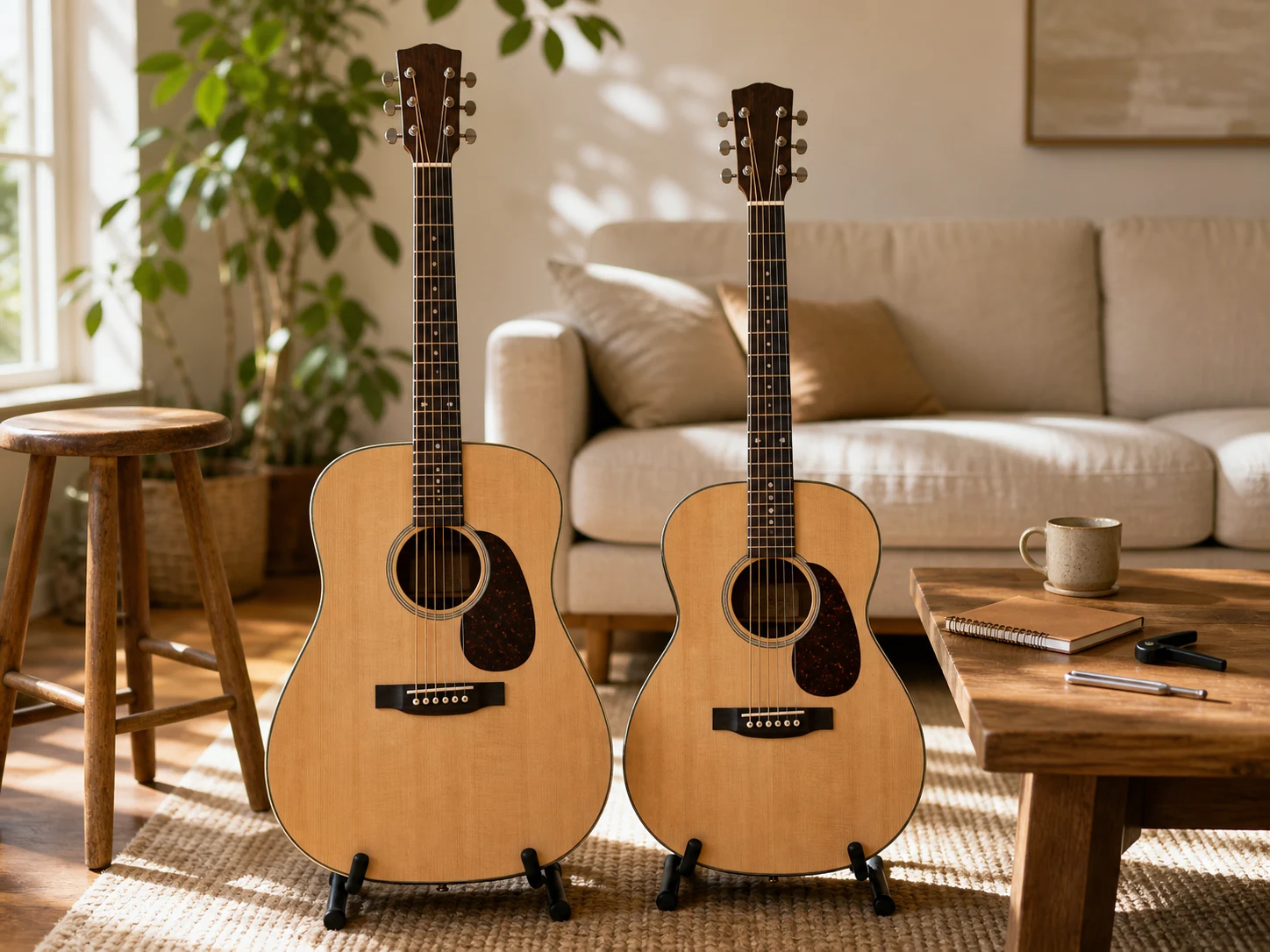
Two guitars can share a solid spruce top, the same nut width, the same fingerboard radius, the same unamplified design, and still ask different things of the player. Yamaha’s FG800 and FS800 are the clear example. The FG800 is the bigger dreadnought: 412 mm wide, 100–118 mm deep, and built around a 650 mm scale. The FS800 is the smaller concert-body option: 380 mm wide, 90–110 mm deep, and 634 mm from nut to saddle. This is not a contest of feature count. It is a fit decision between a full-size body with a longer scale and a more compact body with a shorter scale.

As an Amazon Associate, Worth Adding earns from qualifying purchases. We may earn a commission if you buy through our links.

Two unbranded natural-finish acoustic guitars, one wider dreadnought and one smaller concert body, in a warm living room with a stool, practice notebook, capo, tuning fork, and mug for the Yamaha FG800 vs FS800 comparison.
Last checked
WinnerYamaha FG800
Key splitDreadnought vs concert body
Verdict

Which one should most people buy?

The FG800 wins for most people because its full-size dreadnought format is the clearer default when both guitars otherwise share Yamaha’s listed solid spruce top, 43 mm nut width, unamplified design, and closely matched materials.

Buy the Yamaha FG800 unless the FS800’s smaller concert body and 634 mm scale are the specific reasons you are shopping.

The FG800 is the better starting point for the broadest group of acoustic players because it uses the familiar dreadnought format. Yamaha publishes a 412 mm body width and a 100–118 mm body depth, compared with 380 mm and 90–110 mm for the FS800. It is also 1,038 mm long overall and has a 650 mm scale. None of that proves a sound preference or promises a particular playing experience. It does establish that the FG800 is the bigger, longer-scale instrument in a pair that shares many foundational specifications.

The FS800 is a real alternative, not a lesser version. Yamaha lists it as concert style, with a 497 mm body length, 380 mm body width, 90–110 mm depth, and a 634 mm scale. That smaller physical envelope is the point. A player who wants a more compact acoustic format, or who has tried dreadnoughts and specifically prefers less body width and depth, has a concrete reason to choose the FS800. It shares the solid spruce top, nato/okume back and sides, 43 mm nut, walnut fingerboard, and no-electronics specification of the FG800.
At a glance

The key specs.

These are the standard FG800 and FS800 non-cutaway acoustic models in Yamaha’s official FG/FS800 specification table. Do not carry these details over to a different color, bundle, cutaway, or electric-acoustic variant without checking it.

Best full-size default

Yamaha FG800

A dreadnought-style, solid-spruce-top acoustic for shoppers who want the bigger body and longer scale in this closely related Yamaha pair.

Model
FG800
Body format
Dreadnought style
Dimensions
1,038 mm overall; 412 mm wide; 100–118 mm deep
Scale & nut
650 mm scale; 43 mm nut
Top / body
Solid spruce top; nato/okume back and sides
Controls & fit
No electronics; walnut fingerboard; R400 mm radius
Main drawback
Larger body and longer scale than the FS800.
Best compact-body alternative

Yamaha FS800

A concert-style, solid-spruce-top acoustic for buyers whose brief starts with a smaller body and shorter scale rather than the default dreadnought footprint.

Model
FS800
Body format
Concert style
Dimensions
1,021 mm overall; 380 mm wide; 90–110 mm deep
Scale & nut
634 mm scale; 43 mm nut
Top / body
Solid spruce top; nato/okume back and sides
Controls & fit
No electronics; walnut fingerboard; R400 mm radius
Main drawback
Smaller concert body if you specifically want the dreadnought format.
Fit check

Choose by body shape, not guitar snobbery.

Both guitars share the core material and neck-width story. Start with the amount of instrument you want to hold, the scale length you want under your fingers, and whether you are buying a plain acoustic or actually need electronics.

Buy the FG800 if

You want the bigger traditional acoustic format. The official table calls it dreadnought style and lists a 412 mm width, 100–118 mm body depth, and 650 mm scale. It is the sensible default when you are shopping for a full-size acoustic guitar and have not identified a reason to prioritize a smaller body. Its solid spruce top, nato/okume back and sides, walnut fingerboard and bridge, die-cast chrome tuners, and no-electronics configuration keep the choice focused on physical format rather than a long accessories list.

Skip it if the bigger 412 mm-wide body and 650 mm scale are exactly what you are trying to avoid. The FS800 exists to change those two published dimensions while keeping the family’s core construction language.

Buy the FS800 if

You have a clear preference for a concert-style body. Yamaha lists the FS800 at 380 mm wide, 90–110 mm deep, and 1,021 mm overall, with a 634 mm scale. That does not make it universally easier or better; it makes it physically smaller than the FG800. It is the targeted pick for someone who has held both shapes, knows a more compact body belongs in the routine, or wants to keep the solid spruce top while moving away from the dreadnought footprint.

Skip it if you are deliberately looking for the bigger conventional dreadnought body and longer scale. In that case, the FG800 gives you those published dimensions without giving up shared features such as the 43 mm nut or unamplified configuration.

Fit-check before checkout: read the exact listing title and included-items detail, then confirm that the item is the plain FG800 or FS800 rather than a regional variation, a different finish, a bundle, a left-handed version, or a model with an added pickup. This page compares the manufacturer table’s named FG800 and FS800 models, not every related product in the family.

Side by side

Compare the trade-offs.

Official Yamaha specifications supply the table. Amazon links identify selected ASINs; this comparison makes no live price, inventory, setup, sound, or universal comfort claims.

Key buying trade-offs for Yamaha’s FG800 and FS800 acoustic guitars, checked August 25, 2026.
MetricYamaha FG800Yamaha FS800
Best fitWinner for most peopleFull-size acoustic shoppers who want a dreadnought body and longer scale.Buyers intentionally seeking the smaller concert body and shorter scale.
Body styleDreadnought styleConcert style
Body size412 mm wide; 100–118 mm deep380 mm wide; 90–110 mm deep
Overall length1,038 mm1,021 mm
Scale length650 mm (25 9/16 in.)634 mm (25 in.)
Nut width43 mm (1 11/16 in.)43 mm (1 11/16 in.)
Top / body materialsSolid spruce top; nato/okume back and sidesSolid spruce top; nato/okume back and sides
Fingerboard / electronicsWalnut; R400 mm radius; noneWalnut; R400 mm radius; none
Main trade-offBigger dreadnought body and longer scale.Smaller concert body and shorter scale.
How we compared

The criteria behind the pick.

Body style, published width and depth, overall length, scale length, nut width, top and body materials, fingerboard details, tuners, and electronics configuration decided the recommendation.

Specs checked

We retrieved Yamaha’s official FG/FS800 specification table directly and checked the named FG800 and FS800 columns for body shape, scale, body dimensions, nut width, material descriptions, fingerboard radius, bridge, tuners, and electronics. These are maker-published dimensions and materials, not independent measurements, sound testing, setup assessment, or ergonomic testing.

Why the FG800 wins

The FG800 puts the conventional full-size format first: it is dreadnought style, 412 mm wide, 100–118 mm deep, and built around a 650 mm scale. The FS800 shares the core construction specifications, including a solid spruce top and 43 mm nut, so the verdict does not lean on an invented material advantage. It simply treats the larger dreadnought as the broader default and names the smaller concert shape as the valid exception.

Before choosing either

Guitars are personal physical objects. Verify the exact model and variant, included accessories, finish, return terms, and current maker guidance with the seller. If you can, hold comparable dreadnought and concert shapes before buying. This is a sourced comparison of published product details, not a replacement for a setup check, in-person fit assessment, instrument inspection, or instruction from a qualified teacher or technician.

Source trail

What the recommendation is based on.

Yamaha FG800

Yamaha’s official FG/FS800 specification table identifies the FG800 as dreadnought style. It lists a 650 mm scale, 505 mm body length, 1,038 mm total length, 412 mm body width, 100–118 mm body depth, 43 mm nut width, solid spruce top, nato/okume back and sides, nato neck, walnut fingerboard and bridge, R400 mm radius, die-cast chrome tuners, and no electronics.

Sources: Yamaha official FG/FS800 specification table and selected Amazon listing.

Yamaha FS800

The same Yamaha table identifies the FS800 as concert style. It lists a 634 mm scale, 497 mm body length, 1,021 mm total length, 380 mm body width, 90–110 mm body depth, 43 mm nut width, solid spruce top, nato/okume back and sides, nato neck, walnut fingerboard and bridge, R400 mm radius, die-cast chrome tuners, and no electronics.

Sources: Yamaha official FG/FS800 specification table and selected Amazon listing.

Method note: Yamaha’s official specifications were retrieved directly on August 25, 2026. We use Amazon links to identify products, disclose the affiliate relationship, and avoid live pricing, stock, seller, rating, sound-quality, or universal-comfort claims.

FAQ

Questions before checkout.

Which Yamaha acoustic guitar is the better pick for most people?

The Yamaha FG800 is the better pick for most people deciding between these two solid-spruce-top models. Its dreadnought body is wider and deeper than the FS800, and its 650 mm scale is 16 mm longer. Those published dimensions make it the straightforward choice for a full-size acoustic-guitar format. Choose the FS800 if its smaller concert body and 634 mm scale are the reasons you are narrowing the choice.

What is the main physical difference between the FG800 and FS800?

The FG800 is Yamaha’s dreadnought-style model; its published body width is 412 mm, body depth is 100–118 mm, total length is 1,038 mm, and scale length is 650 mm. The FS800 is concert style, with a 380 mm body width, 90–110 mm body depth, 1,021 mm total length, and 634 mm scale. Both have a 43 mm nut width.

Do these guitars have the same top and back materials?

The official Yamaha specification table lists a solid spruce top and nato/okume back and sides for both the FG800 and FS800. It also lists nato necks, walnut fingerboards and bridges, urea nuts and saddles, black ABS bridge pins with white dots, die-cast chrome tuners, and no electronics for these selected non-cutaway models.

Does the FS800 have a smaller neck width?

No. Yamaha lists a 43 mm, or 1 11/16-inch, nut width for both the FG800 and FS800. Their published fingerboard radius is also the same at R400 mm, or 15 3/4 inches. The meaningful published fit difference is body size and scale length, not nut width.

Are these acoustic-electric guitars?

Not in the selected FG800 and FS800 specifications used here. Yamaha lists no electronics and no connections for both models. Yamaha sells related cutaway electric-acoustic models elsewhere in the family, so confirm the exact model name, finish, listing, and included accessories before purchase.

Thule Force 3 LBest roof cargo box pick
Amazon