Head-to-head travel router comparison

TP-Link TL-WR902AC vs GL.iNet Opal GL-SFT1200

GL.iNet Opal GL-SFT1200 is the better default travel router for most shoppers because it adds AC1200 Wi-Fi, three Gigabit Ethernet ports, USB-C power, OpenWrt-based firmware, and built-in VPN client/server support. TP-Link TL-WR902AC is the smaller, lighter alternative when pack size and a simpler one-port setup matter more.

As an Amazon Associate, Worth Adding earns from qualifying purchases. We may earn a commission if you buy through our links.

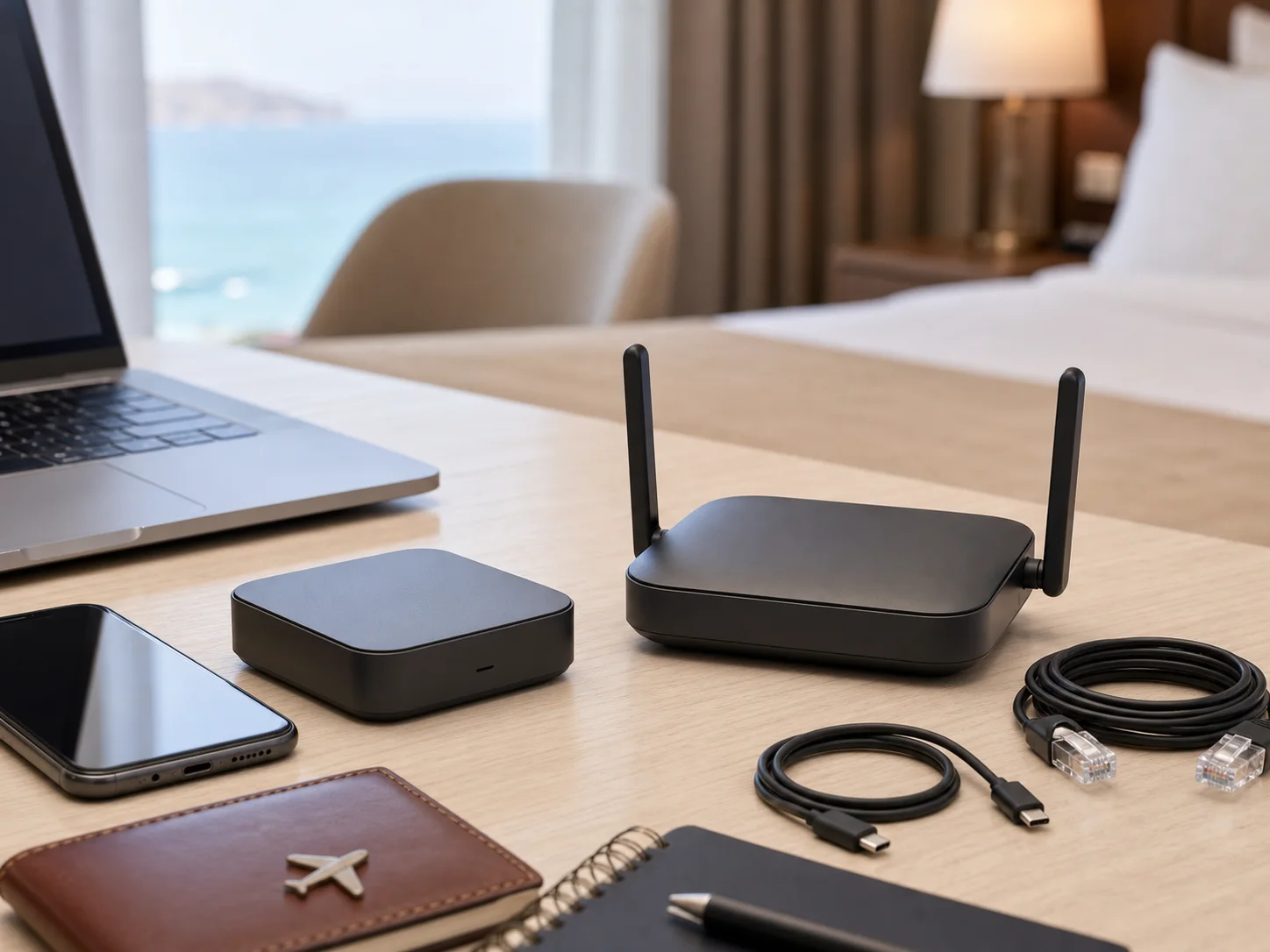
Two unbranded compact travel Wi-Fi routers on a bright hotel-room desk with a laptop, phone, Ethernet cable, USB-C cable, passport wallet, and notebook for the TP-Link TL-WR902AC vs GL.iNet Opal GL-SFT1200 comparison
Last checked
WinnerGL.iNet Opal GL-SFT1200
Smaller travel alternativeTP-Link TL-WR902AC
Verdict

Which one should most travelers buy?

Both routers can turn a wired or existing Wi-Fi connection into a private travel network. The choice is mainly one-port pocket simplicity versus more Ethernet, faster listed Wi-Fi, and VPN-ready firmware.

Opal wins on wired flexibility and travel-network headroom.

GL.iNet lists 300 Mbps on 2.4 GHz, 867 Mbps on 5 GHz, one WAN Ethernet port, two LAN Ethernet ports, 10/100/1000 Mbps Ethernet, USB-C power input, USB 2.0, two fixed external antennas, OpenWrt pre-installed, and VPN client/server features. That makes it the stronger choice when you may connect a laptop dock, streaming box, game console, or work device by wire.

TP-Link TL-WR902AC is still the better fit if the router mostly lives in a pouch and only needs to share one hotel Ethernet or hotspot connection. TP-Link lists a smaller 74 x 67 x 22 mm body, 56.7 g weight, internal antennas, AC750 Wi-Fi, five operating modes, and one 10/100 Mbps WAN/LAN port.

At a glance

The key differences

Smaller travel alternative

TP-Link TL-WR902AC

TL-WR902AC is the simpler pocket choice for travelers who mainly want one tiny router for hotel Ethernet, hotspot mode, access point mode, range extender mode, or client mode.

Wi-Fi speed class
AC750: 433 Mbps on 5 GHz and 300 Mbps on 2.4 GHz
Ethernet
1 x 10/100 Mbps WAN/LAN port
Modes
Router, access point, range extender, client, and hotspot/WISP
Size and weight
2.91 x 2.64 x 0.87 in; 56.7 g
Best role
Smallest-pack router for simple hotel, hotspot, or one-device wired bridging setups
Best travel router pick

GL.iNet Opal GL-SFT1200

Opal is the better everyday travel-router pick if your trips may involve wired work devices, a streaming box, a VPN profile, or a small desk setup that needs more than one Ethernet jack.

Wi-Fi speed class
AC1200: 867 Mbps on 5 GHz and 300 Mbps on 2.4 GHz
Ethernet
1 x WAN and 2 x LAN ports, all 10/100/1000 Mbps
Software
OpenWrt pre-installed with VPN client/server and DNS encryption features
Size and weight
118 x 85 x 30 mm; 145 g
Best role
More flexible travel router for hotel desks, RVs, wired devices, and VPN-led setups
Buyer guide

Choose by ports, power, and setup tolerance.

A travel router is useful only when it matches the networks you actually meet: hotel Ethernet, public Wi-Fi, rental-house desks, RV setups, streaming devices, or work gear that needs a familiar private network.

Buy this if / skip this if

Buy TP-Link TL-WR902AC if
  • You want the smallest and lightest router in this comparison.
  • You mainly need one Ethernet jack for hotel-room router mode or client mode.
  • You prefer internal antennas and a simple mode-switch travel setup.
Skip TP-Link TL-WR902AC if
  • You want Gigabit Ethernet for wired devices or a fast local wired path.
  • You expect to plug in more than one wired device without adding a switch.
  • You want built-in VPN client/server tooling to be a core part of the purchase.

Buy this if / skip this if

Buy GL.iNet Opal GL-SFT1200 if
  • You want three Gigabit Ethernet ports for a laptop dock, streamer, or console.
  • You want OpenWrt-based firmware with VPN client/server and DNS encryption features.
  • You can pack a larger router in exchange for stronger wired and software flexibility.
Skip GL.iNet Opal GL-SFT1200 if
  • You want the smallest router possible for a carry-on tech pouch.
  • You only need basic one-room Wi-Fi sharing and do not plan to use VPN features.
  • You dislike external antennas and want a flatter internal-antenna travel box.
Before you buy

Check the network you are trying to solve.

  • Hotel rules vary: some rooms have Ethernet, some require captive-portal sign-in, and some block extra routing hardware.
  • Speed is not guaranteed: router speed classes are ceilings; real throughput depends on the upstream network, interference, cable, and client devices.
  • Port count changes the setup: one Ethernet port is fine for a single wired bridge, while multiple LAN ports are useful for desk gear.
  • VPN setup takes work: Opal has the stronger VPN feature set, but you still need a compatible VPN service or server profile.
Compare

Compare the trade-offs.

What mattersTP-Link TL-WR902ACGL.iNet Opal GL-SFT1200
Best fitTiny one-port travel routerMore capable travel router with VPN and Gigabit ports
Wi-Fi speed classAC750: 433 Mbps 5 GHz, 300 Mbps 2.4 GHzAC1200: 867 Mbps 5 GHz, 300 Mbps 2.4 GHz
Ethernet1 x 10/100 Mbps WAN/LAN1 x WAN and 2 x LAN, all 10/100/1000 Mbps
USB1 x USB 2.0 for file sharing or 5V/1A device charging1 x USB 2.0 plus USB-C power input
Antennas2 fixed internal antennas2 fixed external Wi-Fi antennas
Power input5V/2A listed powerUSB-C, 5V/3A listed power input
Size and weight74 x 67 x 22 mm; 56.7 g118 x 85 x 30 mm; 145 g
Better choice ifYou want the smallest simple router for travelYou want wired flexibility, OpenWrt, and VPN headroom
How we compared

The criteria behind the pick.

We compared official product pages and spec tables for wireless class, Ethernet speed and port count, operating modes, USB and power setup, firmware features, dimensions, weight, and the trip scenarios each router fits best.

Ports

Ethernet is the practical separator. TL-WR902AC gives you one 10/100 Mbps WAN/LAN port; Opal gives you one WAN and two LAN ports at Gigabit speed, which matters for wired desk setups.

Packability

TP-Link wins on size and weight, so it is easier to leave in a tech pouch. Opal asks for more room but gives back external antennas, more wired ports, and fuller router software.

Omitted data

We left out prices, discounts, ratings, review counts, and availability because those change frequently and were not needed to make the core buying decision.

Source trail

What the recommendation is based on.

FAQ

Questions before checkout.

Which travel router is better for most people?

GL.iNet Opal GL-SFT1200 is the better default because it has AC1200 Wi-Fi, three Gigabit Ethernet ports, USB-C power, OpenWrt pre-installed, VPN client/server features, and more room for wired travel setups.

Why buy TP-Link TL-WR902AC instead?

Buy TL-WR902AC if you want the smaller and lighter option, mainly need one 10/100 Mbps Ethernet port, and prefer a compact internal-antenna router for simple hotel or hotspot sharing.

Which one is better for wired devices?

GL.iNet Opal. It has one WAN and two LAN Ethernet ports, all listed at 10/100/1000 Mbps. TP-Link TL-WR902AC has one 10/100 Mbps WAN/LAN port.

Can either router make bad hotel internet fast?

No. These routers can simplify sharing and private-network setup, but the actual internet speed still depends on the hotel network, upstream ISP connection, interference, and client devices.

Is Opal the only one with VPN features?

In this comparison, Opal is the clear VPN-oriented choice because GL.iNet lists VPN client/server support and OpenWrt pre-installed. TP-Link TL-WR902AC is better treated as a simple multi-mode pocket router.

Bottom line

GL.iNet Opal GL-SFT1200

Choose GL.iNet Opal GL-SFT1200 if you want the more flexible travel router for most trips: AC1200 Wi-Fi, Gigabit WAN/LAN ports, USB-C power, OpenWrt-based controls, and a VPN-ready setup.

BLACK+DECKER CHV1410L Best handheld vacuum pick
Amazon