Head-to-head roof cargo box comparison

Thule Force 3 L vs Yakima SkyBox 16 Carbonite

These are two hard-shell roof boxes with the same stated 16-cubic-foot volume, dual-sided access, included locks, and a family-trip brief. The Thule Force 3 L puts a lighter listed weight, a shorter external length, a 165-pound listed load capacity, and torque-indicated PowerClick mounting at the center. The Yakima SkyBox 16 Carbonite is longer, lists a specific ski length and crossbar-spread range, and uses its SuperLatch and quick-release hardware. The useful decision is about the rack, the gear, and the routine—not a generic claim that one box fits every roof.

As an Amazon Associate, Worth Adding earns from qualifying purchases. We may earn a commission if you buy through our links.

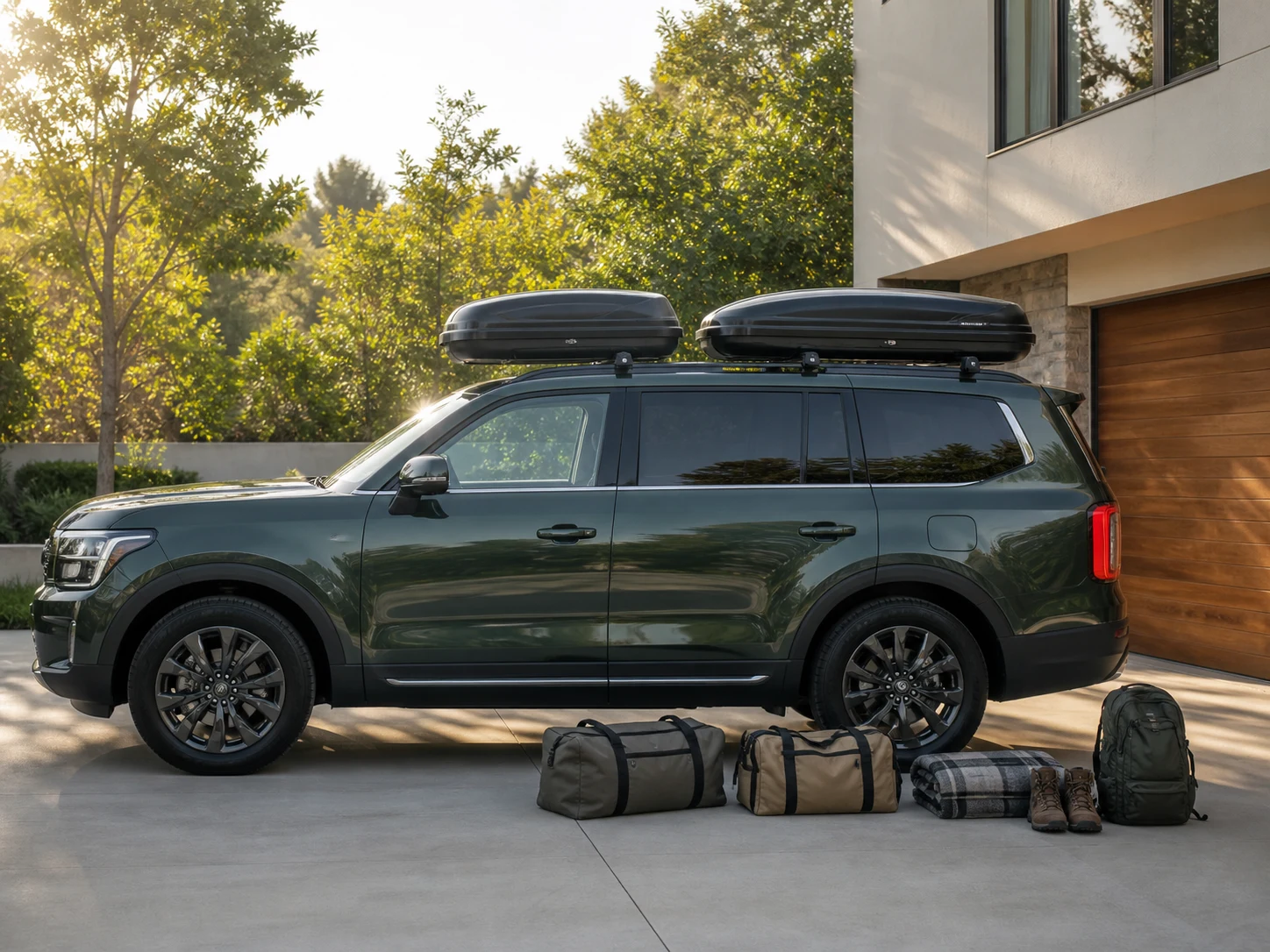
Two unbranded hard-shell roof cargo boxes on a family SUV beside duffel bags, hiking boots, and travel gear for the Thule Force 3 L vs Yakima SkyBox 16 Carbonite comparison.
Last checked
WinnerThule Force 3 L
Gear-first alternativeYakima SkyBox 16
Verdict

Which one should most people buy?

The Thule is the better all-around starting point: 16 cubic feet in a lighter, shorter package, with explicit load capacity and a torque-indicated mounting system. The Yakima earns its case when long ski gear and its published rack-spread range drive the decision.

Buy the Thule Force 3 L unless the Yakima SkyBox 16 Carbonite’s stated 185-centimeter ski fit and published crossbar-spread range answer a requirement in your own setup.

Two boxes can share a volume number and still make different demands on the day you install, load, and remove them. Thule lists the Force 3 L at 16 cubic feet, 76.8 by 33.3 by 16.8 inches externally, and 43 pounds. It also publishes 73.6 by 28.7 by 14.4 inches for the interior, a 165-pound load capacity, PowerClick mounting, SlideLock, locks included, and DualSide opening. Those are concrete planning details for a buyer balancing an ordinary mix of duffels, camping gear, and seasonal luggage against a box that must be lifted, stored, and opened around a vehicle.

The Force 3 L is our default because the official specification set is unusually direct about the things that make a 16-cubic-foot box usable: exterior and interior dimensions, listed weight, load capacity, and the mounting/locking process. Thule says the integrated torque indicator clicks when PowerClick is securely attached; it describes SlideLock as separate locking and opening functions that indicate when the lid is properly closed. That does not remove the need to follow current instructions, but it gives a buyer a clear product-specific workflow to evaluate.

Yakima’s SkyBox 16 Carbonite is not an also-ran. Yakima lists the same 16-cubic-foot volume, a 47-pound weight, 81 by 36 by 15 inches, dual-sided opening, included SKS locks, quick-release mounting hardware, and a 24- to 34.5-inch stated crossbar-spread range. It also says the box fits skis up to 185 centimeters and gear for up to three campers. For a buyer whose longest winter gear or rack geometry is the reason for shopping, those published details can outweigh the Thule’s four-pound lower listed weight and shorter shell. Use the maker’s current vehicle fit information before treating either list as a yes.
At a glance

The key specs.

This comparison covers the selected 16-cubic-foot Thule Force 3 L and Yakima SkyBox 16 Carbonite—not adjacent sizes, older Force XT boxes, rack systems, or roof bags.

Best broad-use format

Thule Force 3 L

A 16-cubic-foot hard-shell box for shoppers prioritizing a shorter listed shell, lower listed box weight, declared load capacity, and an explicit torque-indicated mounting process.

Amazon listing
ASIN B0DYQ4T5ZZ
Stated volume
16 cu ft
External dimensions
76.8 × 33.3 × 16.8 in
Internal dimensions
73.6 × 28.7 × 14.4 in
Listed weight
43 lb
Controls & fit
PowerClick; SlideLock; DualSide opening
Main drawback
Less published exterior length for 185 cm ski planning.
Best long-gear alternative

Yakima SkyBox 16 Carbonite

A 16-cubic-foot hard-shell box for buyers who need its published 185-centimeter ski length, longer shell, and stated crossbar-spread range to line up with their actual rack plan.

Amazon listing
ASIN B017VEN7RK
Stated volume
16 cu ft
External dimensions
81 × 36 × 15 in
Listed weight
47 lb
Crossbar spread
24 to 34.5 in
Controls & fit
Quick-release hardware; SuperLatch; dual-sided opening
Main drawback
Four pounds heavier and longer to plan around.
Fit check

Choose by routine, not cargo-box snobbery.

Start with the things a product comparison cannot safely assume: the exact vehicle, rack, roof limit, crossbar geometry, hatch clearance, lifting plan, and the longest object you intend to pack.

Buy the Thule Force 3 L if

You want a 16-cubic-foot hard-shell box with a shorter published exterior length and lower listed box weight. At 76.8 inches long and 43 pounds, the Force 3 L is not small or weightless—but it is four pounds lighter than the SkyBox and 4.2 inches shorter by the makers’ published external measurements. That is useful when the box will move between a garage rack and a vehicle several times a year, or when you simply want the smaller planning number in this pairing.

Skip it if the deciding item is a ski length up to 185 centimeters or the Yakima’s stated 24- to 34.5-inch crossbar spread maps more clearly to your approved rack configuration.

Buy the Yakima SkyBox 16 if

Your actual packing list is long-gear-first. Yakima specifically says the SkyBox 16 Carbonite fits skis up to 185 centimeters and snowboards. It lists an 81-inch length, 36-inch width, 15-inch height, 47-pound weight, included SKS locks, dual-sided opening, and quick-release mounting hardware. It also publishes a minimum 24-inch and maximum 34.5-inch crossbar spread. Those are better reasons to pick it than vague claims about one brand being universally more rugged.

Skip it if the cargo mix is ordinary soft goods and you would rather have the Thule’s lower listed weight, shorter external length, stated 165-pound capacity, and torque-indicated PowerClick system.

Fit-check callout: Neither product page is permission to install a roof box on an unknown rack. Check the current manufacturer fit tool, your vehicle and rack guidance, roof-load limits, hatch clearance, crossbar geometry, and lift/installation instructions before checkout.
Side by side

Compare the trade-offs.

Official manufacturer pages supply the specifications. Amazon links identify selected ASINs; this comparison makes no live price, availability, rating, or universal vehicle-fit claims.

Key buying trade-offs for the Thule Force 3 L and Yakima SkyBox 16 Carbonite, checked August 23, 2026.
MetricThule Force 3 LYakima SkyBox 16 Carbonite
Best fitWinner for most peopleBroad 16-cu-ft use with a shorter, lighter listed shell.Long-gear purchase led by published ski length and rack-spread details.
Stated volume16 cu ft16 cu ft
External dimensions76.8 × 33.3 × 16.8 in81 × 36 × 15 in
Listed weight43 lb47 lb
Interior / long gear73.6 × 28.7 × 14.4 in; 5–7 ski pairs listedFits skis up to 185 cm; snowboards
MountingPowerClick with torque indicatorQuick-release hardware; 24–34.5 in stated crossbar spread
Closing / accessSlideLock; DualSide opening; locks includedSuperLatch; dual-sided opening; SKS locks included
Main trade-offLess explicitly published long-ski length.Longer and 4 lb heavier by listed figures.
How we compared

The criteria behind the pick.

Volume, exterior and interior dimensions, listed box weight, published load or gear limits, mounting and locking design, opening access, rack-planning details, and real packing routines decided the recommendation.

Specs checked

We retrieved the official Thule and Yakima product pages directly and checked the selected models’ volume, dimensions, box weight, mounting language, locks, opening design, and stated gear or crossbar details. The values are manufacturer-published specifications, not independent road, weather, or security tests.

Why Thule wins

The Force 3 L puts the better all-purpose planning numbers in one 16-cubic-foot package: a 43-pound listed weight, 76.8-inch external length, published interior dimensions, 165-pound stated load capacity, PowerClick torque indication, SlideLock, and DualSide access. It is a decisive but conditional winner, not a universal fit recommendation.

Before choosing either

Use the current official fit tools and instructions before purchase or installation. Verify the vehicle, approved rack, roof-load limit, crossbar layout, hatch clearance, fastener state, lifting plan, and gear dimensions. Follow the maker’s safety, use, and maintenance guidance rather than treating this page as installation advice.

Source trail

What the recommendation is based on.

Thule Force 3 L

Thule lists the Force 3 L at 16 cubic feet, 76.8 by 33.3 by 16.8 inches externally, 73.6 by 28.7 by 14.4 inches internally, 43 pounds, and 165 pounds of load capacity. Its official page describes PowerClick mounting with a torque indicator, SlideLock, locks included, DualSide opening, and capacity for 5 to 7 pairs of skis or 3 to 5 snowboards.

Sources: Thule official Force 3 L page and selected Amazon listing.

Yakima SkyBox 16 Carbonite

Yakima lists the SkyBox 16 Carbonite at 16 cubic feet, 81 by 36 by 15 inches, and 47 pounds. Its official page describes quick-release mounting hardware, SuperLatch, included SKS locks, dual-sided opening, a 24- to 34.5-inch crossbar-spread range, skis up to 185 centimeters, snowboards, and gear for up to three campers.

Sources: Yakima official SkyBox 16 Carbonite page and selected Amazon listing.

Method note: official manufacturer pages were retrieved directly on August 23, 2026. We use Amazon links to identify products, disclose the affiliate relationship, and avoid live pricing, stock, ratings, or seller-specific bundle claims. Specifications and product availability can change; check the current manufacturer material before buying.

FAQ

Questions before checkout.

Which roof cargo box is the better pick for most people?

The Thule Force 3 L is the better pick for most people choosing these two 16-cubic-foot boxes because it is listed at 43 pounds, measures 76.8 by 33.3 by 16.8 inches externally, has a 165-pound stated load capacity, and uses a PowerClick mounting system with a torque indicator plus SlideLock. Choose the Yakima SkyBox 16 Carbonite when its 81-inch length, published 185-centimeter ski length, SuperLatch system, and stated 24- to 34.5-inch crossbar-spread range suit the specific vehicle and gear plan.

Do both boxes hold 16 cubic feet?

Yes. Thule lists 16 cubic feet for the Force 3 L and Yakima lists 16 cubic feet for the SkyBox 16 Carbonite. Equal stated volume does not mean identical usable interior shape, vehicle clearance, or rack fit. Use each maker’s current fit guide and instructions before purchase or installation.

Which box is easier to lift onto a vehicle?

Thule lists the Force 3 L at 43 pounds, while Yakima lists the SkyBox 16 Carbonite at 47 pounds. That four-pound difference is useful planning information, not a claim that either box is easy for one person to lift. Follow the manufacturer instructions and use appropriate help for lifting and installation.

What is the difference between PowerClick and quick-release mounting?

Thule describes PowerClick as a quick-mount system with an integrated torque indicator that clicks when the box is securely attached. Yakima describes the SkyBox’s quick-release mounting hardware and publishes a 24- to 34.5-inch crossbar-spread range. Both are product-specific systems; neither description replaces checking the current vehicle, rack, clearance, and instruction requirements.

Which option is better for skis?

Yakima says the SkyBox 16 Carbonite fits skis up to 185 centimeters and snowboards, so it is the more explicit pick when that published length is central to the purchase. Thule lists the Force 3 L with capacity for 5 to 7 pairs of skis and 3 to 5 snowboards. Confirm your equipment dimensions, rack setup, and the current manufacturer fit information before buying.

Do these specifications guarantee that either box will fit a vehicle?

No. Cargo-box dimensions, crossbar details, load capacity, and hatch-clearance information are planning specifications, not vehicle-fit guarantees. Use the current Thule and Yakima fit tools, read the instructions, and verify the roof rack, crossbar spread, roof load limit, hatch clearance, and applicable vehicle guidance before purchase or installation.

Thule Force 3 LBest roof cargo box pick
Amazon