Head-to-head desktop stapler comparison

Swingline 747 vs Bostitch Ascend

Swingline’s 747 Classic S7074769 is a 20-sheet, full-strip metal desktop stapler with a die-cast base, tacking and pinning functions, and a stated limited lifetime warranty. Bostitch’s Ascend B210-BLK staples 2 to 20 sheets and adds a soft grip, built-in staple remover, StapleStore compartment, reload window, non-skid base, and 180-degree tacking. The useful choice is about durable classic hardware versus convenience at the desk.

As an Amazon Associate, Worth Adding may earn from qualifying purchases.

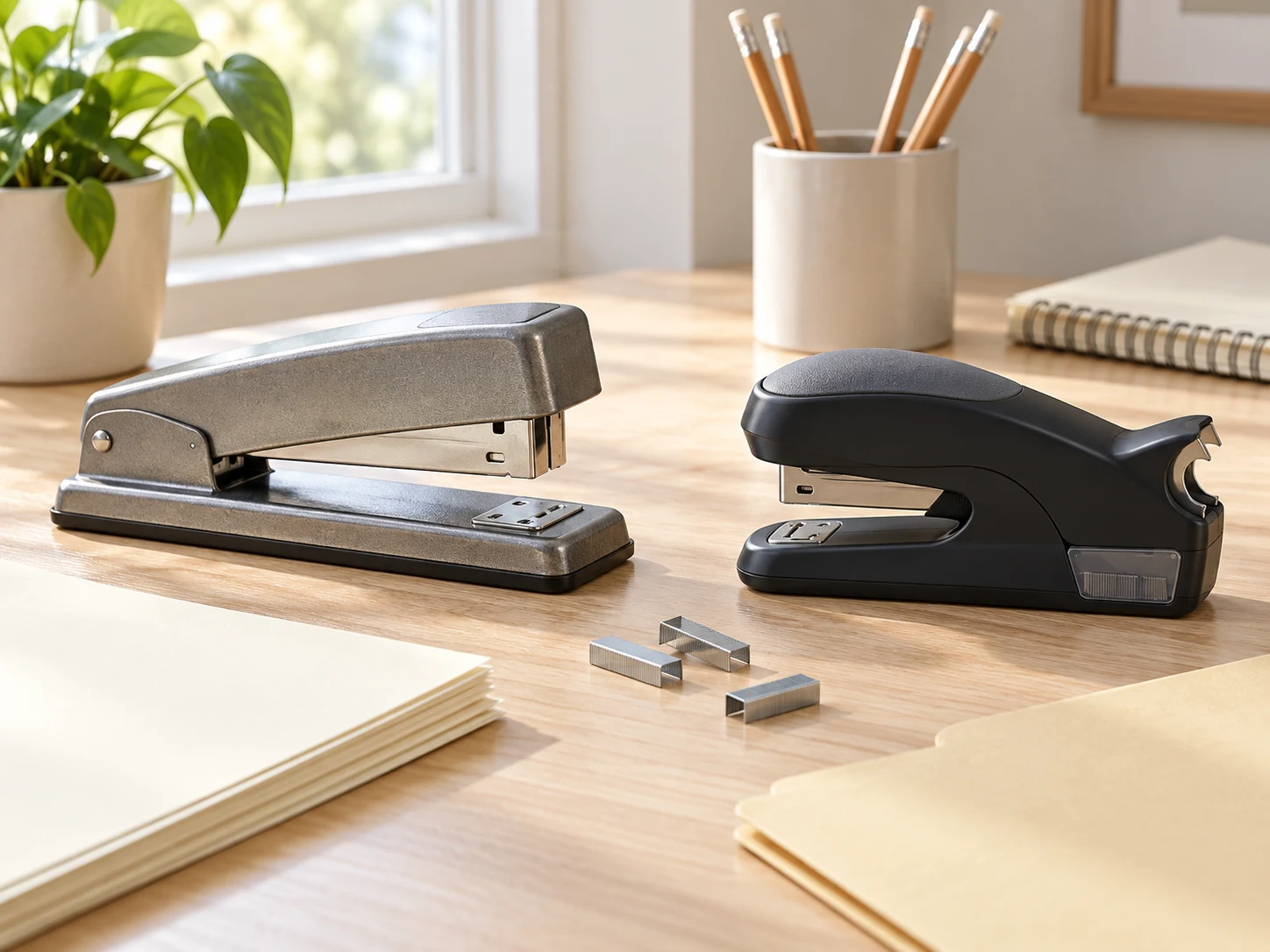
An unbranded steel-gray metal desktop stapler and black ergonomic desktop stapler on a light wood desk with paper, folders, loose staples, pencils, and a notebook for the Swingline 747 vs Bostitch Ascend comparison.
The short answer

Which one should most people buy?

The better default is the metal, full-strip stapler when straightforward daily paperwork and long-term desk use are the priority.

The Swingline 747 Classic is the better all-around choice for a desk that needs a familiar, full-strip stapler without adding extra mechanisms. For the steel-gray S7074769 model, Swingline specifies a 20-sheet capacity, durable metal construction with a die-cast base, full-strip size, tacking ability, pinning ability, and a positive-locking latch. It also lists a limited lifetime warranty. Those are direct ownership details for a buyer who wants a traditional desktop tool with clearly described functions.

The Bostitch Ascend B210-BLK has a real convenience advantage. Bostitch lists a 2-to-20-sheet capacity and a 210-staple magazine, then adds an integrated StapleStore compartment with 420 included staples, a built-in remover, a visual reload alert window, a non-skid base, and an ergonomic soft grip and base. It opens 180 degrees for tacking or craft use. Choose it when the desk routine benefits more from those integrated helpers than from the Swingline’s metal, full-strip classic format.

Because both exact models publish a 20-sheet maximum, capacity does not decide this one. The deciding trade-off is construction and classic office functions against convenience features that reduce small interruptions. The Swingline is the more durable-looking, simpler default on the published specifications. The Ascend is the more purposeful alternative for someone who routinely loses a remover, wants spare staples close by, or prefers a softer hand contact.
At a glance

The key specs.

Published manufacturer details only; paper type, staple choice, and desk habits still shape the everyday experience.

Classic metal default

Swingline 747 Classic

  • Model747 Classic S7074769, steel gray
  • Sheet capacity20 sheets
  • FormatFull-strip desktop stapler
  • Controls & fitTacking, pinning, positive-locking latch
  • Main drawbackNo integrated staple storage or remover
  • Buyer-fit summaryFor a metal, classic desk stapler with direct functions
View Swingline on Amazon
Convenience-first alternative

Bostitch Ascend

  • ModelAscend Plastic Stapler B210-BLK
  • Sheet capacity2 to 20 sheets
  • Magazine capacity210 staples
  • Controls & fitSoft grip, built-in remover, 180-degree tacking
  • Main drawbackPlastic body instead of Swingline’s metal construction
  • Buyer-fit summaryFor storage, reload cues, and desk convenience
View Bostitch on Amazon
Fit check

Choose by routine, not stapler nostalgia.

Both handle the same published page count. Start with what happens before and after you press down.

Buy the Swingline 747 if

Your stapler stays in one place and you want a classic, metal, full-strip tool for regular documents, packets, and office paperwork. Swingline explicitly calls out the die-cast base, full-strip size, tacking ability, pinning ability, and positive-locking latch. The metal construction and listed limited lifetime warranty make the 747 the more straightforward choice for buyers who value a simple, established desk format over integrated accessories.

Skip it if: You want a remover built into the stapler, a defined place to keep backup staples, or a visual prompt before the magazine empties. Those are Bostitch Ascend features, not claims Swingline makes for this 747 model.

Buy the Bostitch Ascend if

You want the desk tool to solve a few adjacent problems. Bostitch specifies a built-in remover, an integrated StapleStore compartment with 420 included staples, a visual reload alert window, and a non-skid base. Its soft rubber grip and base are described as an ergonomic design feature, and it opens 180 degrees for tacking or craft use. That is a coherent package for a shared desk, home office, student workspace, or project drawer.

Skip it if: You specifically prefer a metal, full-strip desktop stapler with Swingline’s listed pinning function and limited lifetime warranty. The Ascend’s convenience-led plastic design is not trying to duplicate that classic hardware emphasis.

Quick fit check: Pick Swingline for the metal full-strip default. Pick Bostitch when integrated storage, removal, and reload cues make the day-to-day routine cleaner. Neither recommendation assumes a particular paper stock, staple brand, or project outcome.
Side by side

Compare the trade-offs.

The table keeps published differences visible without turning small desk preferences into performance promises.

MetricSwingline 747 ClassicBostitch Ascend
Best fitClassic metal, full-strip office staplingConvenience-first desk workflow
ModelS7074769, steel grayB210-BLK, black
Published sheet capacity20 sheets2 to 20 sheets
Construction & formatMetal construction; die-cast base; full stripPlastic stapler with soft grip and base
Staple handlingPositive-locking latch210-staple magazine; storage compartment; reload window
Extra functionsTacking and pinning abilityBuilt-in remover and 180-degree tacking
Main drawbackNo integrated storage or removerDoes not offer the same metal/full-strip emphasis
Buyer fit summarySimple durable desk staple routineCompact desk organization and convenience
How we reasoned

The criteria behind the pick.

This comparison starts with the one numerical point that should not be exaggerated: both exact products publish a 20-sheet maximum. Swingline identifies the S7074769 as a 20-sheet 747 Classic. Bostitch lists the B210-BLK capacity as 2 to 20 sheets. That means the choice is not a simple capacity contest. It is a decision about how the stapler stores, reloads, feels, and handles the small tasks around a stack of paper.

We gave the 747 the overall recommendation because Swingline provides a clear classic-hardware case: metal construction, a die-cast base, full-strip format, tacking, pinning, a positive-locking latch, and limited lifetime warranty wording. For many buyers, that is the right kind of clarity. There is less to interpret and fewer integrated parts to account for. A full-strip metal desktop stapler also fits the familiar rhythm of a permanent office or home desk.

The Ascend earns its alternative recommendation because Bostitch documents features that change the immediate routine. Its StaplesStore compartment keeps extra staples close, and its built-in remover avoids a separate tool. The visual reload alert window and non-skid base are small but practical details. The soft grip and 180-degree opening make its case stronger for mixed desk-and-project use. These are features, not proof that it staples more cleanly or lasts longer in every environment.

We did not infer jam rates, hand-force reduction, staple quality, longevity beyond stated materials and warranty, or a particular result with cardstock, recycled paper, or bulletin boards. The product pages establish functions and capacities, not universal real-world guarantees. Choose by the published details that match your own desk, paper volume, storage habits, and preference for metal hardware or integrated helpers.

There is also a useful ownership question that does not fit into a sheet-capacity number: where do the accessories live? A full strip of staples and a separate remover are ordinary desk supplies, but they can be inconvenient in a shallow drawer, a rolling classroom cart, or a shared work surface. Bostitch deliberately combines those pieces in the Ascend. The 747 makes the opposite kind of case: conventional metal construction, a familiar loading format, and stated pinning as well as tacking. Neither approach is inherently superior; it simply changes what needs to be kept nearby.

Source trail

What the recommendation is based on.

Swingline 747 Classic

Swingline’s official S7074769 product page identifies a 20-sheet 747 Classic in steel gray and lists metal construction, a die-cast base, full-strip size, tacking ability, pinning ability, positive-locking latch, and limited lifetime warranty language.

Read the official Swingline product page

Bostitch Ascend

Bostitch’s official B210-BLK product page lists 2-to-20-sheet capacity, a 210-staple magazine, integrated StapleStore compartment, built-in remover, soft grip, 180-degree opening, non-skid base, reload alert window, and 420 included staples.

Read the official Bostitch product page

Method note: This page uses manufacturer-published product details and Amazon product identifiers for the linked models. It does not use live prices, review scores, third-party performance testing, or a compatibility guarantee. Confirm the exact model, color, included staples, availability, and manufacturer instructions before checkout or use.
Before checkout

Questions before checkout.

Answers match the FAQ structured data on this page.

Which desktop stapler is the better pick for most people?

The Swingline 747 is the better pick for most people choosing between these two desktop staplers. Swingline specifies a metal construction with a die-cast base, a full-strip format, tacking and pinning ability, and a limited lifetime warranty. Choose the Bostitch Ascend when its integrated StapleStore compartment, built-in remover, soft grip, reload alert window, and 20-sheet stated capacity better match a compact, convenience-first desk routine.

Do the Swingline 747 and Bostitch Ascend have the same sheet capacity?

For the exact models compared here, both manufacturers publish a 20-sheet capacity. Swingline identifies the S7074769 as a 20-sheet 747 Classic, while Bostitch lists the B210-BLK capacity as 2 to 20 sheets. Sheet count is a manufacturer specification; paper stock, staple selection, and document condition can affect everyday results.

Which stapler is better for keeping spare staples at the desk?

Bostitch gives the Ascend B210-BLK a direct convenience advantage: its official page describes an integrated StapleStore compartment and says it includes 420 staples there. It also lists a 210-staple magazine capacity. The Swingline 747 is a full-strip desktop stapler, but its official product page does not claim the Bostitch-style built-in staple-storage compartment.

Can both staplers tack papers to a board?

Yes. Swingline lists tacking ability for the 747 Classic. Bostitch says the Ascend opens 180 degrees for tacking or craft use. Those published features describe the open-stapler function; they do not guarantee a result on a particular wall, board, material, or project.

What is the practical difference between the two models?

The Swingline 747 is the metal, full-strip classic with a die-cast base, tacking and pinning functions, positive-locking latch, and limited lifetime warranty. The Bostitch Ascend is the lightweight convenience option with a soft grip and base, built-in remover, staple-storage compartment, reload window, non-skid base, and a stated 20-sheet capacity. Pick by desk workflow rather than assuming either design is universally better.