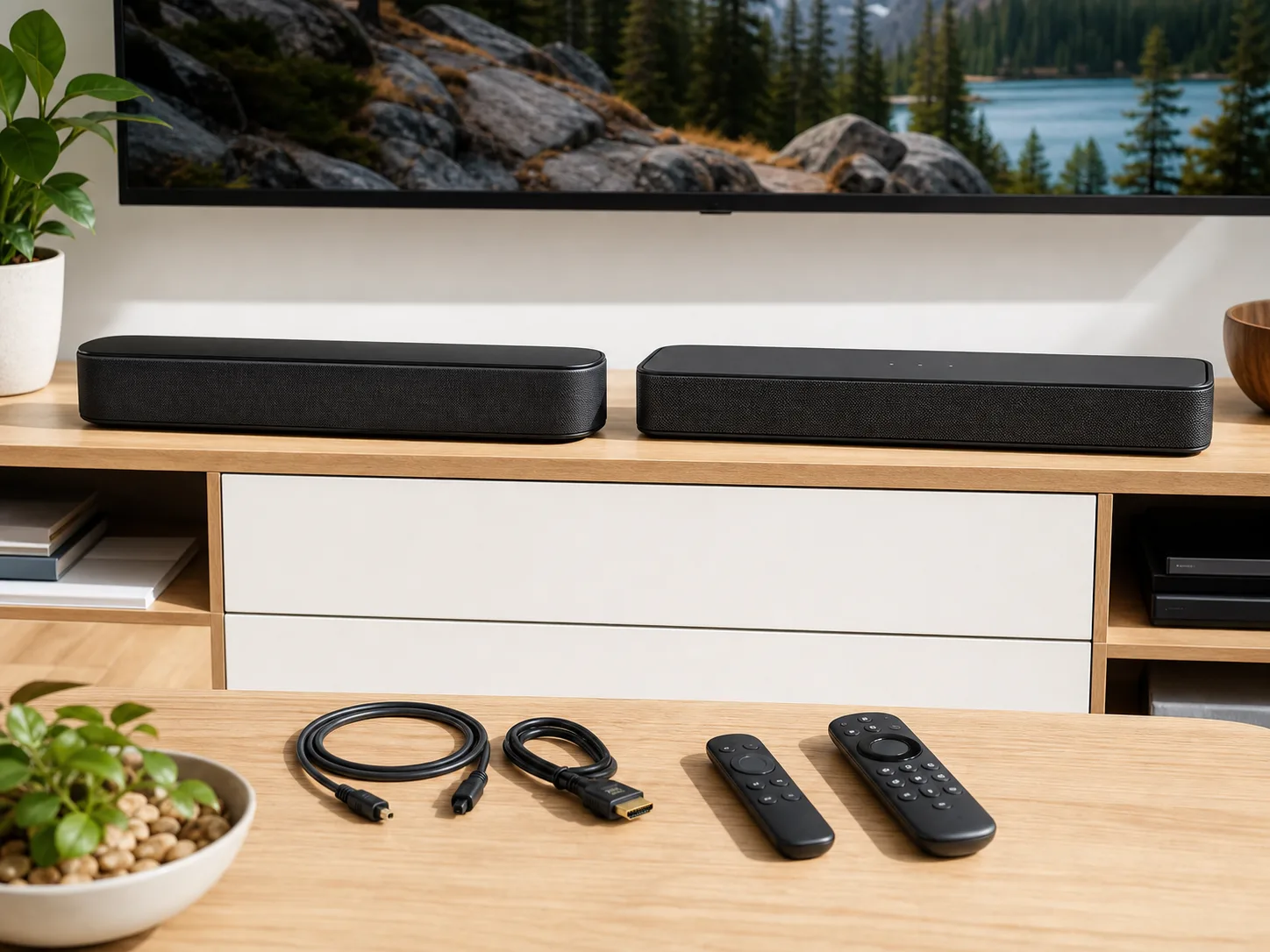
Head-to-head compact soundbar comparison

Bose TV Speaker vs Sonos Ray

The Bose TV Speaker is the better compact soundbar for most simple TV upgrades because it supports HDMI ARC, optical, Bluetooth, an included remote, dialogue mode, bass adjustment, and optional wired Bose bass-module expansion. The Sonos Ray is the better alternative for Sonos households, optical-ready TVs, AirPlay 2, WiFi music streaming, app EQ, Speech Enhancement, Night Sound, Trueplay tuning, and future Sonos surround speakers.

As an Amazon Associate, Worth Adding earns from qualifying purchases. We may earn a commission if you buy through our links.

Two compact black TV soundbars on a bright media console with a remote, HDMI cable, optical cable, streaming remote, and living room details for the Bose TV Speaker vs Sonos Ray comparison
Last checked
Winner Bose TV Speaker
Best alternative Sonos Ray
Verdict

Which one should most people buy?

Bose is the stronger default when the job is "make TV voices clearer tonight" without committing to an app-first audio system.

Buy Bose unless you specifically want the Sonos system.

The Bose TV Speaker wins for most buyers because HDMI ARC keeps setup familiar on many modern TVs, optical is still available for older sets, Bluetooth covers casual phone streaming, and the included remote means you are not dependent on an app for everyday controls. Bose also lists a 2.21-inch height, 23.38-inch width, 4.34-pound weight, Bluetooth 4.2, and a 30-foot Bluetooth range.

Choose the Sonos Ray if the soundbar is part of a bigger Sonos plan. Ray is optical-only for TV audio, but it adds WiFi, AirPlay 2, Ethernet, Sonos app EQ, Speech Enhancement, Night Sound, Trueplay tuning on supported iOS devices, and wireless Sonos surround expansion. It is also slightly narrower at 21.93 inches, though taller than Bose at 2.76 inches.

At a glance

The key specs.

Best simple TV upgrade

Bose TV Speaker

A compact all-in-one TV soundbar focused on simple setup, clearer dialogue, Bluetooth music, a physical remote, and optional wired Bose bass-module expansion.

TV connection
HDMI ARC or optical; optical cable included, HDMI cable sold separately
Wireless
Bluetooth 4.2; up to 30 ft listed range
Controls
Included remote, dialogue mode, bass adjustment, HDMI-CEC with compatible TVs
Expansion
Optional wired Bose Bass Module 500 or Bass Module 700; no satellite surround speakers
Size and weight
2.21 x 23.38 x 4.02 in; 4.34 lb
Best for
Simple HDMI ARC setup, optical fallback, Bluetooth from a phone, clearer dialogue, and shoppers who do not want app-first TV audio.
Best Sonos-system alternative

Sonos Ray

A compact optical TV soundbar with Sonos app controls, WiFi streaming, AirPlay 2, Ethernet, Speech Enhancement, Night Sound, Trueplay tuning, and optional Sonos surround expansion.

TV connection
Optical only; TV or PC must have optical output
Wireless
WiFi; AirPlay 2; Spotify Connect and Sonos app streaming
Controls
Sonos app EQ, capacitive touch controls, IR TV remote sync, Speech Enhancement, Night Sound
Expansion
Wireless Sonos rear surround speakers; Sonos whole-home grouping
Size and weight
2.76 x 21.93 x 3.66 in; 4.19 lb
Best for
Sonos users, optical-ready TVs, app tuning, AirPlay 2, WiFi music, and shoppers planning a wireless surround path.
Buyer guide

Start with your TV ports and control style.

Both are compact soundbars for smaller media consoles. The difference is less about raw size and more about whether you want HDMI ARC simplicity or Sonos app-and-WiFi features.

Bose TV Speaker

Buy this if / skip this if

Buy this if
  • Your TV has HDMI ARC and you want one cable plus HDMI-CEC control from a familiar TV remote.
  • You want Bluetooth music from a phone without signing into a whole-home audio platform.
  • You want a physical remote with dialogue and bass buttons for quick adjustments from the couch.
Skip this if
  • You want WiFi music streaming, AirPlay 2, app EQ, or whole-home speaker grouping built into the soundbar.
  • You plan to add wireless rear surrounds; Bose lists bass-module expansion for this model, not satellite surround speakers.
  • Your setup depends on Sonos services, Sonos Ace TV Audio Swap, or Sonos app-based room tuning.
Sonos Ray

Buy this if / skip this if

Buy this if
  • Your TV or PC has optical output and you are comfortable configuring the soundbar through the Sonos app.
  • You want AirPlay 2, WiFi streaming, Ethernet, app EQ, Speech Enhancement, and Night Sound in a compact bar.
  • You already own Sonos speakers or plan to add compatible Sonos rear surrounds later.
Skip this if
  • Your TV setup is HDMI ARC-first and you do not want to rely on an optical output or adapter.
  • You want Bluetooth music streaming directly to the TV soundbar from guests' phones.
  • You prefer a physical remote in the box instead of app-led setup and touch controls.
HDMI ARC vs optical

HDMI ARC is the practical reason Bose wins for many living rooms. Optical can sound good, but Ray requires it, so check the exact TV or monitor output before ordering.

App dependency

Sonos rewards app users with EQ, streaming services, Speech Enhancement, Night Sound, and Trueplay. Bose is the lower-friction choice when you mostly want remote-based TV audio.

Expansion path

Bose can add a wired bass module for more low end. Sonos is the better ecosystem pick if wireless rear surrounds or whole-home grouping are part of the purchase plan.

Before you buy

Check these compact-soundbar fit points first.

  • Confirm the TV port you will actually use: Bose supports HDMI ARC or optical, while Ray needs optical output for TV audio.
  • Measure height under the screen. Bose is lower at 2.21 inches; Ray is taller at 2.76 inches but slightly narrower.
  • Decide whether guests need quick Bluetooth playback. Bose has Bluetooth; Ray leans on WiFi, AirPlay 2, Spotify Connect, and the Sonos app.
  • Plan expansion before buying. Bass-only expansion and wireless rear-surround expansion solve different problems.
Side by side

Compare the trade-offs.

The table focuses on official specs that change ownership: TV connection, control style, app requirements, streaming, dialogue tools, expansion, dimensions, and setup caveats.

Bose TV Speaker vs Sonos Ray official spec comparison.
Metric Bose TV Speaker Sonos Ray
Best fit WinnerSimple TV upgrades, HDMI ARC, optical fallback, Bluetooth, included remote, and quick dialogue or bass adjustment. Sonos households, optical-ready TVs, app controls, WiFi streaming, AirPlay 2, and future wireless surround speakers.
TV audio connection HDMI ARC or optical; optical cable included, HDMI cable sold separately Optical only; TV or PC must have optical output
Wireless audio Bluetooth 4.2; up to 30 ft listed range WiFi, AirPlay 2, Spotify Connect, and Sonos app streaming
Controls Included remote, HDMI-CEC with compatible TVs, dialogue mode, bass adjustment Sonos app, touch controls, IR remote sync, app EQ, Speech Enhancement, Night Sound
Room tuning No ADAPTiQ listed for this model Trueplay tuning with a supported iOS device
Expansion Optional wired Bose Bass Module 500 or 700; no satellite surround speakers Compatible wireless Sonos rear surrounds and whole-home grouping
Audio formats Focused on TV output through HDMI ARC or optical; Bose does not position it as an Atmos bar Stereo PCM, Dolby Digital, and DTS Digital Surround listed by Sonos
Size and weight 2.21 x 23.38 x 4.02 in; 4.34 lb 2.76 x 21.93 x 3.66 in; 4.19 lb
Main drawback No built-in WiFi streaming, AirPlay 2, app EQ, or wireless rear-surround path. Optical-only TV connection and app-first setup make it less universal for HDMI ARC living rooms.
Buyer fit summary The Bose TV Speaker is the cleaner pick when TV simplicity, HDMI ARC, and Bluetooth matter most. The Sonos Ray is the cleaner pick when the soundbar belongs inside a Sonos and AirPlay 2 household.
How we compared

The criteria behind the pick.

We compared manufacturer-published specifications, official product pages, connection requirements, control methods, dialogue features, streaming features, expansion options, size, weight, included setup items, and product-specific retailer listings. Prices, ratings, review counts, and availability were intentionally left out because they can change and were not needed for this buying decision.

Specs checked

Official Bose and Sonos pages supplied the TV inputs, wireless features, app and remote controls, dimensions, weight, and expansion guidance used here.

Fit checked

The recommendation favors the soundbar that creates the fewest setup surprises for a typical TV while still naming the ecosystem case where the alternative is stronger.

Best fit

Pick Bose for HDMI ARC simplicity and Bluetooth. Pick Sonos when optical output, AirPlay 2, app controls, and Sonos expansion are part of the plan.

Source trail

What the recommendation is based on.

Bose TV Speaker

The Bose TV Speaker is the better fit when HDMI ARC, optical fallback, Bluetooth, a physical remote, lower bar height, and bass-module expansion matter most.

Sources: Bose, Bose owner guide, and retailer listing.

Sonos Ray

The Sonos Ray is the better fit when optical TV audio, Sonos app controls, AirPlay 2, WiFi music, Trueplay, and Sonos surround expansion matter most.

Sources: Sonos, Sonos support, and retailer listing.

FAQ

Questions before checkout.

Which compact soundbar is better for most people?

Bose TV Speaker is the better default for most simple TV upgrades because it supports HDMI ARC, optical, Bluetooth, an included remote, dialogue mode, bass adjustment, and optional wired Bose bass modules without requiring an app for normal setup.

Why would someone choose Sonos Ray instead?

Choose Sonos Ray if your TV or PC has optical output and you want Sonos app control, WiFi streaming, AirPlay 2, Speech Enhancement, Night Sound, Trueplay tuning from a supported iOS device, or future Sonos surround expansion.

Do both soundbars use HDMI?

No. Bose TV Speaker supports HDMI ARC and optical connections. Sonos Ray connects to TV audio through optical, so a TV or PC needs optical output or a separate compatible adapter path.

Which one is better for music streaming?

Sonos Ray is better for app-based and WiFi music streaming because Sonos lists WiFi, Apple AirPlay 2, Spotify Connect, and whole-home Sonos grouping. Bose TV Speaker is simpler for Bluetooth streaming from a phone or tablet.

Can either compact soundbar add rear speakers?

Sonos Ray can be expanded with compatible Sonos rear surround speakers. Bose says the TV Speaker can add a wired Bose Bass Module 500 or 700, but it does not support satellite surround speakers.

Best overall

Bose TV Speaker

HDMI ARC, optical fallback, Bluetooth, an included remote, dialogue mode, bass adjustment, and optional wired bass-module expansion make the Bose TV Speaker the simpler compact soundbar for most TV upgrades.

Last checked: . Retailer availability, coupons, delivery estimates, and other listing details can change without notice.

Decision notes
Best overallBose TV Speaker
Best Sonos alternativeSonos Ray
Data sourceOfficial Bose and Sonos specs plus product-specific Amazon listings
Last checked
Bose TV Speaker Better simple soundbar fit.
Amazon