Head-to-head French press comparison

Bodum Chambord vs ESPRO P3

Bodum’s classic 34-ounce Chambord pairs a borosilicate-glass carafe with a stainless-steel frame. ESPRO’s 32-ounce P3 adds a protective polypropylene frame and a double microfilter designed to isolate the brew after the plunge. This is a choice between a simple, familiar press and a filter-led daily ritual.

As an Amazon Associate, Worth Adding may earn from qualifying purchases.

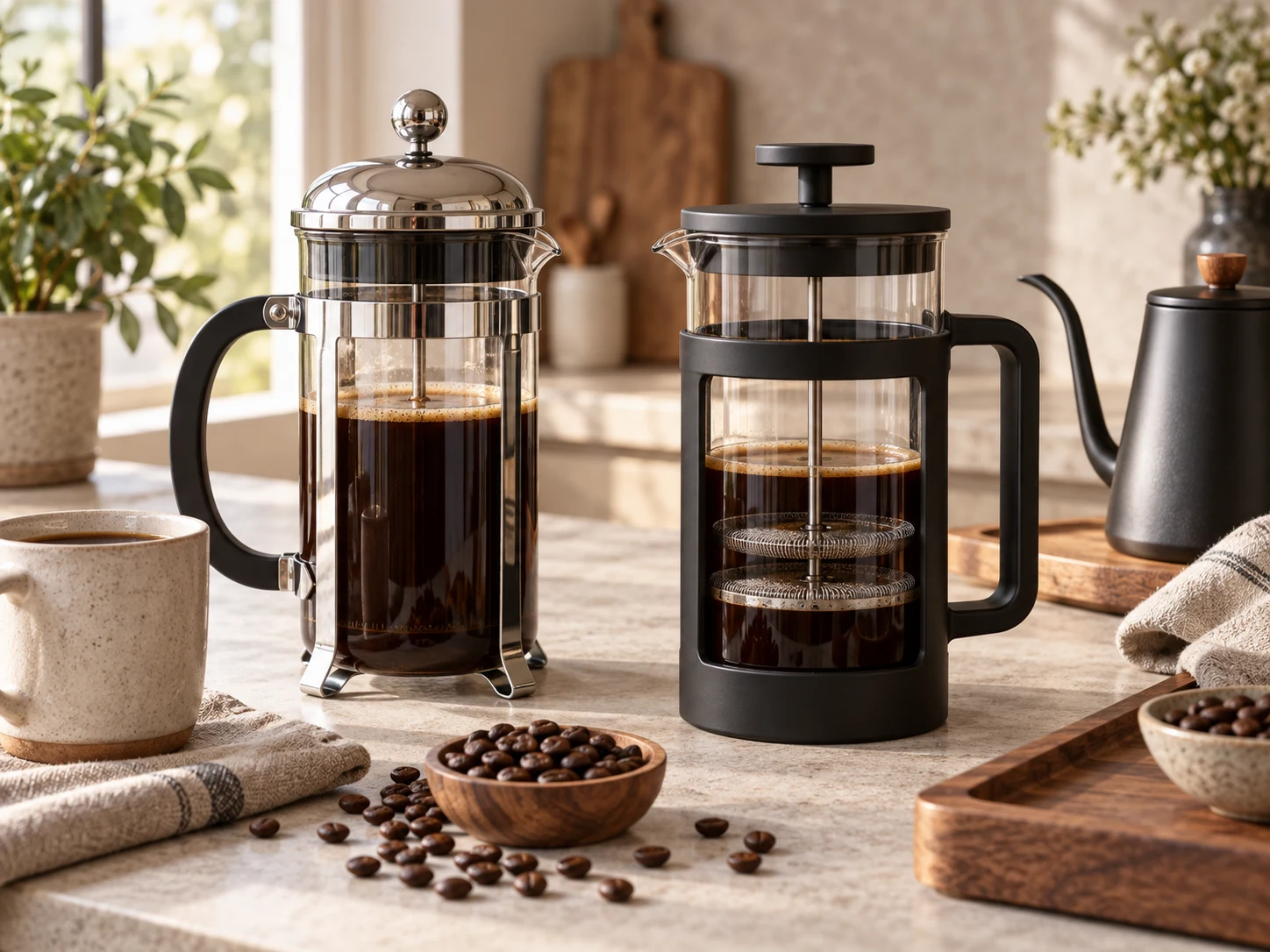
An unbranded classic silver-frame glass French press and a contemporary black-frame double-filter glass French press with coffee beans, mug, kettle, linen, and tray for the Bodum Chambord vs ESPRO P3 comparison
The short answer

Which one should most people buy?

The Chambord is the cleaner default when you want a full-size press with simple parts and a familiar stainless-and-glass format.

The Bodum Chambord is the better all-around pick for most people because its official specification tells a direct ownership story: an 8-cup, 1.0 L / 34-ounce borosilicate-glass coffee maker with a stainless-steel frame and dishwasher-safe parts. It is the conventional French-press format shoppers recognize. There is no extra filtering system to learn before the first brew, and the full-size 34-ounce capacity is a practical fit for a shared breakfast, a couple of mugs, or a small pot to decant into a carafe.

The ESPRO P3 is not merely a black-framed Chambord alternative. ESPRO lists a 32-ounce capacity, a 24-ounce minimum brew size, borosilicate glass, and a polypropylene protective frame with a glass lock. Its distinctive claim is the patented double microfilter system. ESPRO says that design helps isolate the coffee after the plunge, and it offers separately sold paper filters for the P3. That gives the P3 a deliberate buyer: someone who wants the press itself to prioritize the filter-and-pour stage.

Neither choice needs exaggerated claims about flavor, speed, or universal ease. A French press is still a manual brewer, and coffee dose, water, grind, timing, and cleanup remain part of the routine. The Chambord wins because it keeps the decision simple while offering the slightly larger published capacity. Choose the P3 when its filtering architecture is the point, not when you simply need a dependable glass press.

At a glance

The key specs.

These are manufacturer-published product details, not live pricing or performance-test claims.

Classic full-size option

Bodum Chambord

  • ModelChambord 8-cup French press
  • Capacity1.0 L / 34 oz
  • ConstructionBorosilicate glass, stainless steel, plastic
  • Controls & fitClassic plunger; dishwasher-safe parts
  • Main drawbackNo stated double-microfilter system
  • Buyer-fit summaryFor a straightforward full-size glass press
View Bodum on Amazon
Filter-led option

ESPRO P3

  • ModelP3 French Press Coffee Maker
  • Capacity32 oz; 24 oz listed minimum brew
  • Dimensions6.1 × 4.3 × 9.51 in
  • Controls & fitDouble microfilter; protective glass-lock frame
  • Main drawbackMore specialized filter assembly
  • Buyer-fit summaryFor shoppers prioritizing filtering design
View ESPRO on Amazon
Fit check

Choose by routine, not coffee snobbery.

The useful distinction is the brewer you will comfortably dose, plunge, pour, rinse, and put back into service every day.

Buy the Bodum Chambord if

You want the classic press workflow with an explicitly published 1.0 L / 34-ounce capacity. Bodum describes a borosilicate-glass carafe held in a stainless-steel frame, with plastic components, and says the Chambord is dishwasher safe. The metal frame gives the glass body a familiar protected profile without turning the brewer into a system of special modes or accessories.

That uncomplicated layout makes sense for a shopper who wants to make coffee, serve it promptly, and clean the parts without treating the press as a technical project. The Chambord is also the better fit when the marginal two ounces of listed capacity matters for a larger breakfast or two generous mugs.

Skip it if: Your central reason for choosing a French press is to seek a double-microfilter approach or the P3’s stated brew isolation after plunging. The Chambord is a conventional press; do not invent an extra filtering feature it does not claim.

Buy the ESPRO P3 if

You are comparing presses because the filter itself matters to you. ESPRO identifies the P3’s patented double microfilter, says the design isolates coffee after the plunge, and says separately sold paper filters are compatible. It also lists a borosilicate-glass carafe, a polypropylene frame, and a locking mechanism that holds the glass in that frame.

The P3 is a purposeful choice for someone who will use that filter setup as part of the regular routine. Its 32-ounce capacity and 24-ounce minimum brew size make the published bounds clearer for a larger daily batch. The dimensions, 6.1 by 4.3 by 9.51 inches, may also be useful when an upper cabinet or appliance shelf determines the fit.

Skip it if: You want the most straightforward parts list and the slightly larger listed capacity. A specialized double filter is an advantage only when you value the behavior it is designed for and will happily clean and maintain it.

Quick fit check: Measure the shelf height, decide whether your usual batch is closer to the P3’s stated 24-ounce minimum or a full pot, and choose the filtering workflow you will actually repeat. Do not treat either product’s cup count as a guarantee of servings; mug sizes and recipes vary.

Side by side

Compare the trade-offs.

A focused table for published differences a shopper can use before checkout.

MetricBodum ChambordESPRO P3
Best fitSimple full-size classic French-press routineFiltering-led manual coffee routine
ModelChambord 8-cup / 1.0 L pressP3 French Press Coffee Maker
Published capacity1.0 L / 34 oz32 oz; 24 oz minimum brew
DimensionsCheck exact retailer configuration6.1 × 4.3 × 9.51 in
MaterialsBorosilicate glass, stainless steel, plasticBorosilicate glass and polypropylene
Filter / pour fitClassic plunger designDouble microfilter; paper filters sold separately
Main drawbackNo claimed double-microfilter workflowMore specialized assembly and smaller listed capacity
Buyer fit summaryFamiliar glass-and-metal press for shared batchesFor buyers who deliberately want filter technology
How we reasoned

The criteria behind the pick.

This recommendation uses manufacturer-published details that can genuinely separate the products: capacity, material, listed dimensions, stated minimum brew size, construction, cleaning statement, and filtering design. Those details matter in ownership. They do not establish a universal hierarchy in taste, brew strength, heat retention, break resistance, or cleanup time for every coffee and every kitchen.

The Chambord gets the nod because it has the clearer default proposition. Bodum’s official page identifies the exact 34-ounce / 1.0 L size, a borosilicate-glass carafe, stainless-steel frame, and dishwasher-safe construction. That is enough for a buyer who wants a full-size manual press without making the filter configuration the centerpiece. The published capacity advantage is small, but it reinforces the conventional shared-pot use case.

The P3 earns its different recommendation through documented design rather than vague premium language. ESPRO describes a double microfilter, post-plunge isolation, an optional paper-filter path, a protective frame, and a 24-ounce minimum brew size. Those are concrete reasons to select it. They are not permission to promise that it will remove all sediment, make all coffee smoother, or work best with every grind. The useful conclusion is simply that P3 buyers are choosing a more filter-focused system.

We intentionally leave out live prices, marketplace ratings, retailer bundle contents, and unsourced claims about which press lasts longer. Confirm the exact finish, included parts, availability, and instructions on the retailer listing before buying. Use the manufacturer care guidance, especially around glass, heat, and cleaning, rather than treating this comparison as a safety instruction sheet.

For a final practical decision, set each option beside the equipment you already use. A scale, kettle, mug, serving carafe, dish rack, and cabinet shelf can make a published dimension or filter layout more meaningful than an abstract feature checklist. Neither manufacturer page substitutes for checking the specific listing you intend to purchase.
Source trail

What the recommendation is based on.

Bodum Chambord

Bodum’s official Chambord page identifies the 8-cup model as 1.0 L / 34 oz and describes the French-press method, borosilicate glass, stainless-steel frame, plastic components, and dishwasher-safe construction.

Read the official Bodum product page

ESPRO P3

ESPRO’s official P3 page lists 6.1 × 4.3 × 9.51-inch dimensions, a 32-ounce capacity, 24-ounce minimum brew size, borosilicate glass and polypropylene, the double microfilter, and optional paper filters.

Read the official ESPRO product page

Method note: This page uses manufacturer-published product details and Amazon product identifiers for the linked models. It does not use live prices, review scores, third-party performance testing, or a compatibility guarantee. Confirm the exact model, finish, included contents, availability, and manufacturer instructions before checkout or use.
Before checkout

Questions before checkout.

Answers match the FAQ structured data on this page.

Which French press should most people buy?

The Bodum Chambord is the better pick for most people choosing between these two 32-ounce French presses. Bodum specifies a 1.0 L / 34 oz capacity, borosilicate-glass carafe, stainless-steel frame, and dishwasher-safe parts. Pick the ESPRO P3 when its double microfilter, listed 24-ounce minimum brew size, protective polypropylene frame, and stated post-plunge isolation better match the routine.

Do the Bodum Chambord and ESPRO P3 hold the same amount?

They are close but not identical. Bodum identifies this Chambord as an 8-cup, 1.0 L, 34-ounce model. ESPRO lists the P3 at 32 ounces, with a 24-ounce minimum brew size. Cup labels differ by maker, so ounces and the brewer instructions are the more useful planning details.

What is the ESPRO P3 double microfilter for?

ESPRO says the P3 uses its patented double microfilter system and that it isolates brewed coffee after the plunge. The company also says its filter is compatible with separately sold paper filters. Those are workflow and filtering-design differences, not a guarantee that every coffee, grinder setting, or user will get the same cup.

Is the Bodum Chambord easier to clean?

Bodum says the Chambord is dishwasher safe, and its published construction is straightforward: borosilicate glass, stainless steel, and plastic. The P3 includes a more involved double-filter assembly and a glass-locking frame. Ease of cleaning will still depend on the owner, grounds, and whether the parts are promptly rinsed.

Can I make a small batch in either French press?

ESPRO explicitly lists a 24-ounce minimum brew size for the 32-ounce P3. The official Bodum page identifies the Chambord capacity but does not give a matching minimum brew amount for this exact model. For either brewer, follow the maker instructions and your coffee recipe rather than assuming a smaller batch will behave identically.